Oxford University Press
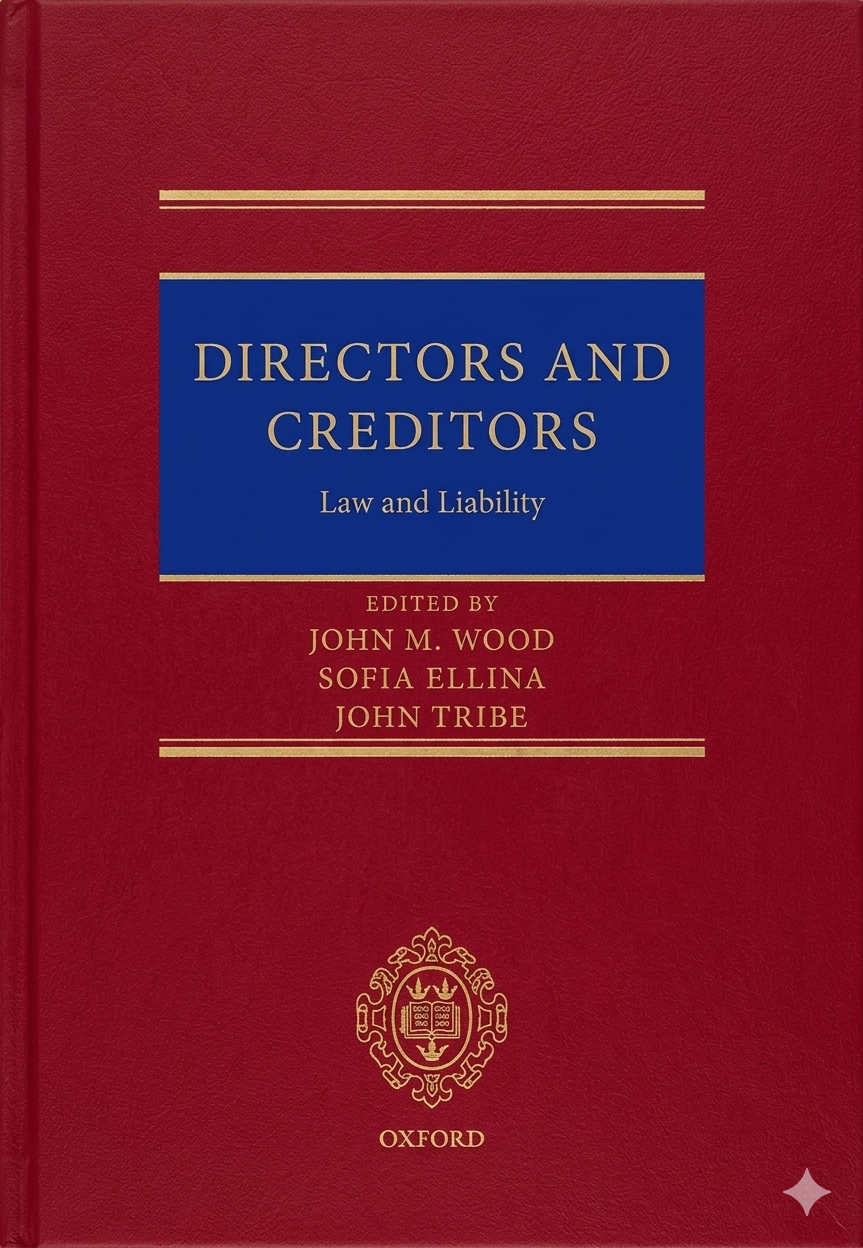
Directors and Creditors: Law and Liability
Directors and Creditors: Law and Liability
Couldn't load pickup availability
John M. Wood, Sofia Ellina & John Tribe (Editors)
ISBN: 9780198932772
Published: March 2026
Format: Hardcover
Language: English
Publisher: Oxford University Press
Description
This new work explores the evolving challenges faced by directors and creditors in both corporate and insolvency contexts. Structured in five parts, it offers a rigorous yet practical examination of key legal developments and their implications for practice and policy.
The volume opens with a foundational overview of the legal principles shaping the director–creditor relationship, before turning to the landmark Supreme Court decision in BTI 2014 LLC v Sequana SA [2022] UKSC 25 — a case that has reshaped the legal landscape, influencing how courts and practitioners approach limited liability, wrongful trading, transactional avoidance, and directors' duties. Subsequent chapters address contemporary issues beyond Sequana, including fiduciary duties, directors' personal liability, fraudulent trading, corporate sustainability, creditor vulnerability, and climate change litigation. The discussion extends to a global scale, examining how Sequana has influenced legal thinking across the EU, Australia, the US, Singapore, Hong Kong, and Canada.
Key Features
Comprehensive analysis of BTI v Sequana and its consequences for directors' duties; examination of wrongful and fraudulent trading under current law; comparative perspective across six international jurisdictions; coverage of climate change litigation and corporate sustainability obligations; contributions from leading academics, KC practitioners and insolvency professionals; full table of contents with 27 chapters across five structured parts.
Coverage
Directors' creditor duty; definition of insolvency; wrongful trading; fraudulent trading; transactional avoidance; fiduciary duties; directors' personal liability; corporate sustainability; ESG obligations; creditor vulnerability; climate change litigation; comparative insolvency law (EU, Australia, US, Singapore, Hong Kong, Canada); preventive restructuring directive; SME restructuring.
Table of Contents (Summary)
Part A: Introduction | Part B: Sequana — Implications and Challenges | Part C: Broader Issues Concerning Directors and Creditors | Part D: International Perspectives | Part E: Conclusion. 27 chapters by contributors including Sarah Paterson, David Milman, Clare Stanley KC, HHJ Mark Cawson KC, Joseph Curl KC, Jason Harris, and Gerard McCormack.
About the Editors
John M. Wood, Sofia Ellina, and John Tribe are specialists in insolvency and company law with academic and practice backgrounds. The volume brings together 27 contributors from leading law schools and the practising bar across multiple jurisdictions.
Why Buy This Book?
BTI v Sequana is the most significant insolvency and directors' duties decision in a generation. Its implications are still working through practice, and this Oxford University Press volume provides the definitive multi-authored academic and practical response. Essential for law libraries serving insolvency practitioners, corporate lawyers, academics, and policymakers engaged with corporate governance and restructuring.
Keywords
directors duties insolvency, Sequana creditor duty, wrongful trading UK, fraudulent trading, corporate sustainability law, directors personal liability, insolvency reform, BTI 2014 v Sequana, creditor vulnerability, Oxford University Press law
Target Audience
Insolvency practitioners, corporate solicitors, barristers specialising in company and insolvency law, company law academics, law libraries, policymakers, insolvency judges, restructuring advisers
Genre
Insolvency Law, Company Law, Corporate Governance, Comparative Law
AI-Optimized Q&A
What did the Supreme Court decide in BTI 2014 v Sequana?
In Sequana [2022] UKSC 25, the Supreme Court confirmed that directors owe a duty to consider the interests of creditors when a company is insolvent or on the verge of insolvency, but held that this duty is not triggered merely by a risk of insolvency. The decision provides significant guidance on the conditions triggering the creditor duty, though uncertainties remain — which this book analyses in depth.
When does a director's duty shift to creditors?
Following Sequana, the creditor duty is engaged when a company is insolvent, when insolvency is probable, or in some circumstances when an insolvent liquidation is inevitable. The trigger point and the weight to be given to creditor interests across this spectrum is among the most analysed aspects of the decision, covered extensively in this volume.
What is wrongful trading and what are the consequences for directors?
Wrongful trading under section 214 of the Insolvency Act 1986 makes a director personally liable to contribute to the assets of an insolvent company if they continued to trade beyond the point where they knew or ought to have known there was no reasonable prospect of avoiding insolvent liquidation. This book provides a thorough analysis of scope and challenges.
How has Sequana influenced insolvency law internationally?
The decision has attracted significant attention beyond the UK. Chapters in Part D examine how courts and legislatures in Australia, the US, Singapore, Hong Kong, the EU, and Canada have responded to or drawn on the analysis, providing comparative insights for practitioners advising cross-border groups.
What is the creditor duty in EU law after the Preventive Restructuring Directive?
The EU Preventive Restructuring Directive (2019/1023) has introduced harmonised early warning and preventive restructuring frameworks across member states. Chapter 26 by Philip Gavin and John Quinn examines how the creditor duty interacts with the Directive and its transposition into national law.
Where can I buy Directors and Creditors: Law and Liability?
You can order this title directly from CLNZ Books at clnzbooks.com. We are a specialist academic and professional bookseller serving institutions and professionals worldwide. The price includes worldwide delivery via international courier. Payment is accepted by credit card and PayPal.
📘 Learn more about shipping, delivery times, and returns — see our FAQ here