

The EU's Supply Chain Rules Just Got Narrower, Not Simpler
On 18 March 2026, the Omnibus I amendments to the EU's Corporate Sustainability Due Diligence Directive entered into force. The changes narrow the Directive's scope to companies with more than 5,000 employees and €1.5 billion in turnover, push first application out to 26 July 2029, and set the national transposition deadline at 26 July 2028. Brussels is calling it simplification, but for the companies still in scope — and the far larger set of suppliers who sell into their value chains — the practical result is a narrower rule sitting alongside, not instead of, the UK's own supply chain and modern slavery regimes, US sanctions exposure, and sector-specific ESG reporting that hasn't gone anywhere.
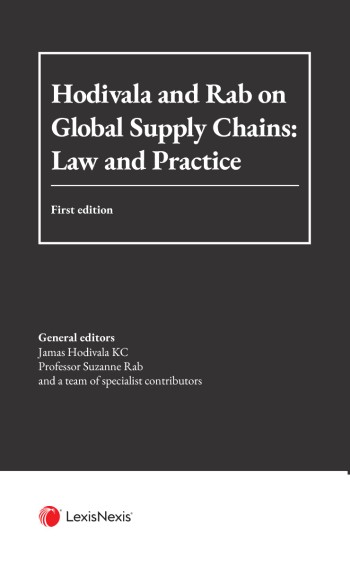
Hodivala and Rab on Global Supply Chains: Law and Practice (LexisNexis Butterworths, October 2026), edited by Jamas Hodivala KC and Professor Suzanne Rab, is built for exactly that overlap. In one volume it moves from an international regulatory overview and its specific impact on the UK market, through international trade rules and environmental and sustainability regulation, to supply chain risk management and separate chapters on criminal and civil liability.
Three places where that structure does real work:
- Compliance teams can use the due diligence and risk assessment chapter to benchmark a supplier programme against the post-Omnibus CSDDD baseline, rather than the original 2024 text that no longer applies as written.
- In-house counsel facing a criminal liability question — a forced labour or environmental allegation surfacing two or three tiers down a supply chain — get a dedicated chapter rather than having to cross-reference separate criminal and regulatory texts.
- Trade counsel on cross-border supply contracts can read the international trade chapter alongside the ESG chapter in the same reference, useful when one transaction raises both questions at once.
For law libraries supporting trade, regulatory or compliance practice groups, or business schools teaching supply chain governance, this is a reference that should hold its value through the Omnibus implementation period out to 2028–2029, because it is organised around the regulatory landscape as a whole rather than any single instrument that is still being amended.
CLNZ Books ships this title worldwide with the price covering delivery, accepts card and PayPal for individual orders, and can issue a pro-forma invoice for institutional and library purchase orders.
Q&A
Q: What changed for EU supply chain law in March 2026?
A: The Omnibus I amendments to the CSDDD entered into force on 18 March 2026, narrowing the directive's scope and pushing back its transposition and application dates.
Q: Does the book cover more than EU rules?
A: Yes — it opens with an international overview of the global regulatory landscape before turning to its specific impact on the UK market, alongside trade, ESG, and liability chapters.
Q: Is this a due diligence book or a disputes book?
A: Both — it covers due diligence and risk management as well as dedicated chapters on criminal and civil liability once something has already gone wrong.
Q: Where can I buy Hodivala and Rab on Global Supply Chains: Law and Practice?
A: It's available now from CLNZ Books, with worldwide shipping included and institutional ordering options via our Request a Quote page.