

Party Autonomy Over Evidence: What the 2026 Arbitration Reforms Mean for Contract Drafters
2026 has been a landmark year for procedural reform in international dispute resolution — and party autonomy has been the throughline. On 1 June 2026, the updated ICC Arbitration Rules came into force, giving tribunals new power to restrict or dispense with document production and evidence entirely where parties agree, and expanding the monetary thresholds for streamlined, party-driven procedures. Three months earlier, China's revised Arbitration Law took effect, codifying party autonomy over the seat and procedural law of arbitration for the first time.
The message from both reforms is the same: institutions are giving contracting parties more room to shape, in advance, how their disputes will be proven — not just where or under what rules they'll be heard.
A comparative resource for a fast-moving area
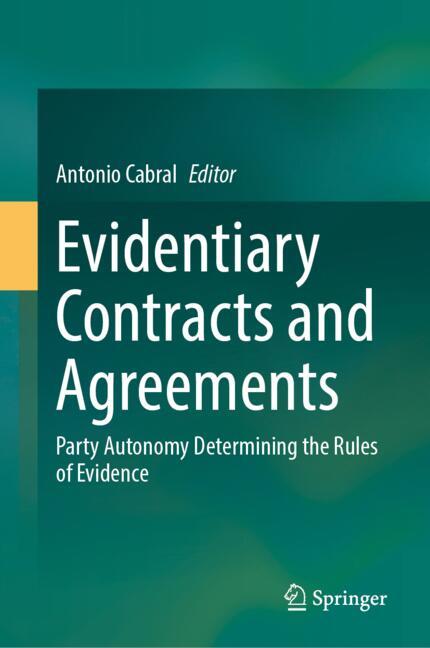
That is exactly the terrain covered by Evidentiary Contracts and Agreements: Party Autonomy Determining the Rules of Evidence, edited by Prof. Dr. Antonio Cabral (University of Rio de Janeiro, Vice-President of the International Association of Procedural Law) and newly published by Springer Cham. The volume compares how different legal systems treat contractual stipulations over evidence — from jurisdictions that emphasize judicial control over fact-finding to those that give litigants the primary role in shaping how proof is produced, weighed, and challenged.
For practitioners drafting arbitration clauses or advising on cross-border contracts, the book offers a systematic look at what can and can't be negotiated: burden of proof, standards of proof, admissibility, and the procedures for producing and evaluating evidence.
Explore more titles in our Law collection.
Q&A
Why does party autonomy over evidence matter now? Because major arbitral institutions (ICC) and national legislators (China) have just expanded it in 2026, practitioners need a clear framework for what's negotiable and what isn't.
What is an evidentiary contract? An agreement by which parties define or modify, by consent, the rules of evidence that will apply to their dispute, departing from default statutory rules.
Do the 2026 ICC Rules directly regulate evidentiary contracts? They expand tribunals' power to limit or dispense with evidence production by party agreement, which is a related but distinct mechanism from a standalone evidentiary contract.
Who is this book written for? Litigators, arbitrators, judges, academics, and law librarians working in civil procedure, dispute resolution, and comparative law.
Where can I order it? Directly from CLNZ Books, with secure worldwide shipping and payment by credit card or PayPal.