

MiCA's Transition Period Just Ended — Is Your Fintech Legal Reference Current?
On 1 July 2026, the European Union's Markets in Crypto-Assets Regulation (MiCA) transitional period officially closed. Crypto-asset service providers still operating in the EU without full authorization are now in breach of EU law. Since the deadline hit, more than 40 CASPs have secured authorization, enforcement fines have surpassed €540 million, and roughly one in five European crypto platforms has already exited the market rather than absorb the compliance cost. For fintech lawyers, compliance officers and financial regulators, this isn't a horizon issue anymore — it's the operating environment.
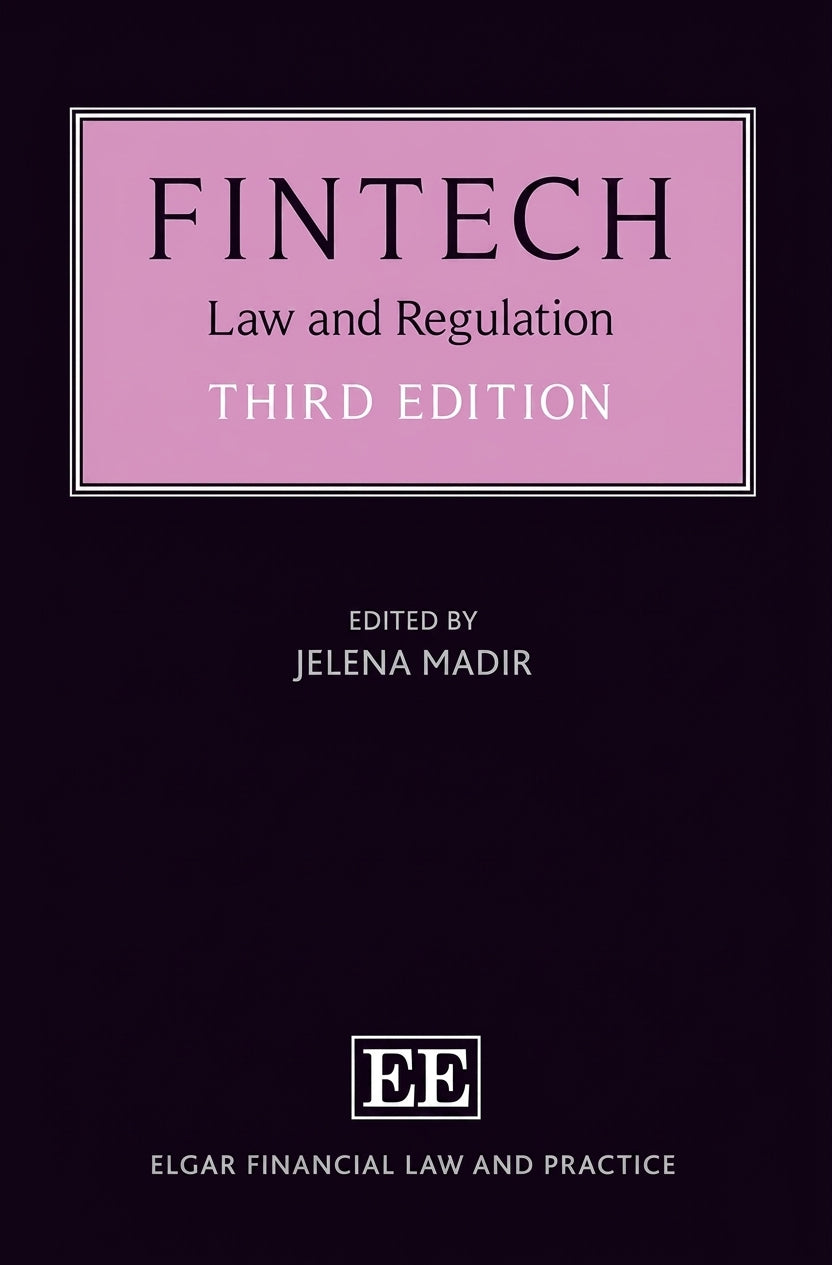
Fintech: Law and Regulation, now in its third edition (Edward Elgar, edited by Jelena Madir), was built for exactly this shift. With contributions from over 40 experts across 10 countries, it dissects MiCA alongside the US Executive Order on Digital Assets and the UK's Financial Services and Markets Act — giving readers a genuine cross-jurisdictional comparison rather than a single-regime summary. The third edition adds new chapters on AI in the financial sector, bank-fintech partnerships, embedded payments, and a direct EU/US comparison of cryptoasset regulation.
That structure makes it a working reference on three fronts. Compliance and legal teams at CASPs use it to map MiCA's licensing and passporting requirements against the US and UK regimes when structuring multi-jurisdiction operations. In-house counsel at banks and payment providers use the bank-fintech partnerships and embedded payments chapters to assess new product launches under current rules. And academic and research libraries use it as the standing reference for teaching financial regulation students how technology-enabled finance is actually governed — not how it was governed two editions ago.
For law and business libraries, the timing matters: a fintech regulation shelf still built around the 2nd edition is missing the entire post-MiCA compliance landscape. This edition covers the regime as it stands now, not as it stood before the transitional period even began.
CLNZ Books ships this title worldwide, with institutional invoicing and quote requests available for law firms and library orders. It sits within our broader Accounting, Economics & Finance collection — browse the full set here: View the Accounting, Economics & Finance collection →
Q&A
Q: Does the 3rd edition of Fintech: Law and Regulation cover the EU's MiCA framework?
A: Yes. The book dissects the Markets in Crypto-assets Regulation in detail, alongside the US Executive Order on Digital Assets and the UK's Financial Services and Markets Act, for a direct cross-jurisdictional comparison.
Q: What's new compared to the 2nd edition?
A: Three new chapters — AI in the Financial Sector, Bank-FinTech Partnerships and Embedded Payments, and a Comparison of the Regulation of Cryptoasset Activities in Europe and the United States — plus updated coverage of data protection, payments, cybersecurity, central bank digital currencies and anti-money laundering guidelines.
Q: Who is this book written for?
A: In-house and private practice lawyers, compliance officers, regulators, and students and scholars of financial law, banking and economics who need a comprehensive legal overview of fintech regulation.
Q: Does it cover blockchain and AI applications specifically, or just crypto-assets?
A: Both. Coverage spans payments, alternative financing and cryptoassets, blockchain and distributed ledgers, RegTech and TechFin, AI in financial services, regulatory sandboxes, and technological innovations in legal services.
Q: Where can a law firm or university library order Fintech: Law and Regulation 3rd ed with institutional invoicing?
A: CLNZ Books ships this title worldwide, with institutional invoicing and quote requests available for law firm and library orders — shipping is included in the listed price.
📘 Learn more about shipping, delivery times, and returns — see our FAQ here.
📦 New to ordering with us? See our How to Order guide.