Kluwer Law International (The Netherlands)
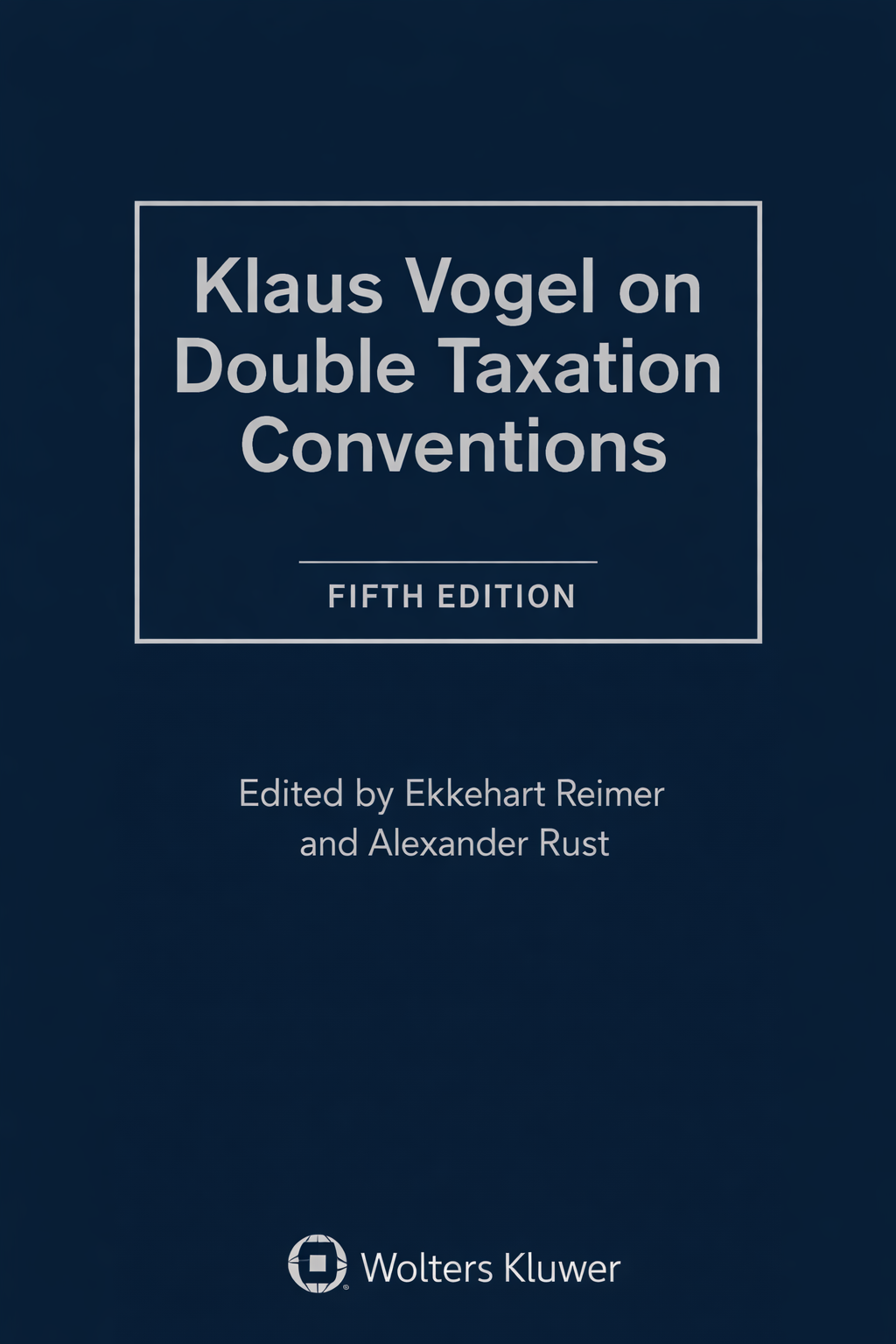
Klaus Vogel On Double Taxation Conventions 5th ed. 2 volumes
Klaus Vogel On Double Taxation Conventions 5th ed. 2 volumes
Quote response within 24h · Institutional invoicing available
Couldn't load pickup availability
Edited by: Ekkehart Reimer (Editor), Alexander Rust (Editor)
ISBN: 9789403513003
Published: January 2022
Format: Hardback, 2 volumes
Language: English
Publisher: Kluwer Law International
Description
Klaus Vogel on Double Taxation Conventions is regarded as the international gold standard on the law of tax treaties. This article-by-article commentary has been completely revised and updated to give practitioners a full and current account of double tax conventions (DTCs). DTCs form the backbone of international taxation, but they raise many interpretational questions — this market-leading work provides authoritative answers, grounded in the OECD/G20 Multilateral Instrument, the 2017 OECD Model Convention and Commentary, and the most recent amendments to the UN Model Convention, with relevant case law and scholarly literature through 2020.
Key Features
Article-by-article commentary on every provision of the OECD and UN Model Conventions
Country-practice reports on the DTC practice of Austria, Canada, France, Germany, India, the Netherlands, Switzerland, the UK and the US
Full treatment of the 2017 Anti-BEPS Multilateral Instrument and how it amends bilateral DTCs, textually or in substance
Coverage of the latest tax treaties worldwide, including key treaties between OECD and BRICS countries
Separate UN Model annotations wherever the UN MC and Commentary diverge from the OECD text
Coverage
This Fifth Edition updates the work with the many developments in double taxation since the previous (2015) edition, together with a wealth of new and revised case law and the DTCs of emerging countries. Across the two volumes, the commentary follows the OECD Model Convention article by article: scope and definitions (Articles 1–5), taxation of income (Articles 6–21), taxation of capital (Article 22), methods for the elimination of double taxation — exemption and credit (Articles 23A/23B) — and the special provisions on non-discrimination, mutual agreement procedure, exchange of information, assistance in the collection of taxes, and entitlement to treaty benefits (Articles 24–30).
About the Authors
Ekkehart Reimer and Alexander Rust, the editors of this Fifth Edition, worked directly with the late Professor Klaus Vogel and have assembled an international team of leading tax law experts to update and expand the commentary for current practice.
Author LinkedIn Profiles
• Ekkehart Reimer: https://www.linkedin.com/in/ekkehart-reimer
• Alexander Rust: https://www.linkedin.com/in/alexander-rust
Table of Contents
Volume I
Preface
Acknowledgments
List of Abbreviations
Introduction
Chapter I. Scope of the Convention
Article 1. Persons Covered
Article 2. Taxes Covered
Chapter II. Definitions
Article 3. General Definitions
Article 4. Resident
Article 5. Permanent Establishment
Chapter III. Taxation of Income
Article 6. Income from Immovable Property
Article 7. Business Profits
Article 8. International Shipping and Air Transport
Article 9. Associated Enterprises
Preface to Articles 10 to 12
Article 10. Dividends
Article 11. Interest
Article 12. Income from Royalties
Article 13. Capital Gains
Ex-Article 14. Independent Personal Services
Volume II
Article 15. Income from Employment
Article 16. Directors' Fees/Directors' Fees and Remuneration of Top-Managerial Officials
Article 17. Entertainers and Sportspersons
Article 18. Pensions
Article 19. Government Service
Article 20. Students
Article 21. Other Income
Chapter IV. Taxation of Capital
Article 22. Capital
Chapter V. Methods for Elimination of Double Taxation
Article 23A/23B: Exemption Method/Credit Method
Chapter VI. Special Provisions
Article 24. Non-discrimination
Article 25. Mutual Agreement Procedure
Article 26. Exchange of Information
Article 27. Assistance in the Collection of Taxes
Article 28. Members of Diplomatic Missions and Consular Posts
Article 29. Entitlement to Benefits
Article 30. Territorial Extension
Chapter VII. Final Provisions
Articles 31/32. Entry into Force/Termination
Index
Why buy this book?
Previous editions of the Vogel have been routinely relied on by courts around the world — including in Australia, Canada, Germany, India, South Africa, the Netherlands and the United Kingdom — making this the standard reference practitioners cite when advising on treaty interpretation. It gives you everything needed to confidently advise on the taxation of income, the taxation of capital and the elimination of double taxation, grounded in the most current and respected analysis available from an outstanding team of editors and authors.
This title anchors CLNZ Books' Taxation 2026 Catalogue as the standing reference for treaty interpretation — see the full catalogue for related new titles, including Schwarz on Tax Treaties (7th ed.) and The UN Model Tax Convention: Recent Developments.
International Organizations & Institutions
• OECD Tax: https://www.oecd.org/tax/
• United Nations: https://www.un.org
• International Fiscal Association (IFA): https://www.ifa.nl
• International Bureau of Fiscal Documentation (IBFD): https://www.ibfd.org
• UNCTAD: https://unctad.org
Keywords
Double Taxation, Tax Treaties, OECD Model Convention, UN Model Convention, BEPS Multilateral Instrument, Permanent Establishment, International Tax Law
Target Audience
Tax Practitioners, International Tax Consultants, Legal Academics, Policy Makers, Tax Law Students, Law Libraries
Genre
Legal Commentary, Taxation, International Law, Academic Reference, Professional Reference
Q&A
Q: What is the difference between the OECD Model Convention and the UN Model Convention on double taxation?
A: Both models share the same basic structure for allocating taxing rights between countries, but the UN Model generally gives more taxing rights to the source country (typically the developing country), for example through a broader permanent establishment threshold. Klaus Vogel on Double Taxation Conventions addresses this directly, with separate annotations wherever the UN MC and Commentary diverge from the OECD text.
Q: Is Klaus Vogel on Double Taxation Conventions still the standard reference for interpreting tax treaties?
A: Yes. Courts in Australia, Canada, Germany, India, South Africa, the Netherlands and the United Kingdom have routinely relied on earlier editions, and this Fifth Edition updates the commentary with developments since 2015, including the BEPS Multilateral Instrument and current case law.
Q: Does the 5th edition of Klaus Vogel cover the BEPS Multilateral Instrument?
A: Yes. It analyses how the 2017 Anti-BEPS Multilateral Instrument amends bilateral DTCs, textually or in substance, alongside the 2017 OECD Model Convention and Commentary.
Q: How is Klaus Vogel on Double Taxation Conventions organized?
A: As an article-by-article commentary following the structure of the OECD Model Convention across two volumes — covering scope, definitions, taxation of income, taxation of capital, elimination of double taxation and special provisions such as non-discrimination and mutual agreement procedure.
Q: Who edited the 5th edition of Klaus Vogel on Double Taxation Conventions?
A: Professors Ekkehart Reimer and Alexander Rust, who worked with the late Professor Klaus Vogel and an international team of tax law experts to update and expand the commentary.
Q: Where can I buy Klaus Vogel on Double Taxation Conventions 5th ed.?
A: It's available at CLNZ Books (clnzbooks.com), Bookseller for Professionals Worldwide, with secure checkout, institutional invoicing and a price that includes worldwide shipping.
More about Taxation, click here
📘 Learn more about shipping, delivery times, and returns, see our FAQ here
📦 New to ordering with us? See our How to Order guide for payment, shipping, and institutional order options.