Wiley-Blackwell
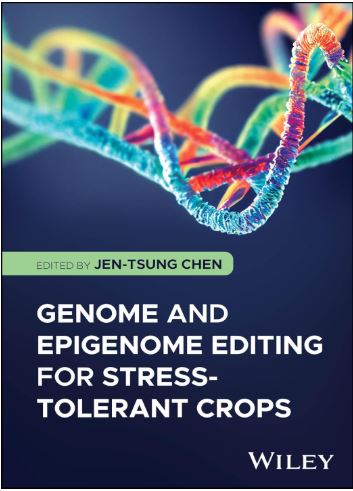
Genome and Epigenome Editing for Stress-Tolerant Crops
Genome and Epigenome Editing for Stress-Tolerant Crops
Quote response within 24h · Institutional invoicing available
Couldn't load pickup availability
Authors:
Jen-Tsung Chen
- ISBN: 9781394280018
- Published: June 2025
- Format: Hardcover (also available as eBook)
- Language: English
- Publisher: Wiley (Wiley-Blackwell)
Description:
Climate change, population growth, and resource constraints are forcing agriculture to evolve fast. Genome and Epigenome Editing for Stress-Tolerant Crops brings together advanced approaches to develop crops that perform under pressure—combining genome editing (CRISPR/Cas) with epigenome regulation and non-coding RNA (ncRNA) strategies. The book connects molecular innovation with real-world crop improvement goals: stronger resilience, better yield, and higher quality.
Key Features:
- In-depth overview of CRISPR/Cas and non-coding RNA strategies to develop stress-tolerant crops.
- Integrates omics approaches (genomics, transcriptomics, metabolomics) for comprehensive crop improvement.
- Covers resilience against abiotic and biotic stresses: drought, salinity, pests, and pathogens.
- Practical applications of CRISPR and RNA technologies for high-yield, high-quality crop development.
- Recent research in epigenetic regulation to fine-tune plant stress responses.
- Future directions in plant science to inspire new research and experimental design.
Coverage:
- CRISPR/Cas genome editing pipelines for crop trait improvement
- ncRNA and epigenetic regulation linked to stress tolerance
- Multi-omics integration for actionable breeding and biotech decisions
- Abiotic stress: drought, heat, salinity and related physiology
- Biotic stress: pests, pathogens, and defense response optimization
- From lab strategy to field impact and sustainable agriculture goals
About the Authors:
Jen-Tsung Chen is Professor of Cell Biology. His work spans plant molecular biology, bioinformatics, systems biology, and plant biotechnology, with publications and books in areas including functional genomics and CRISPR-based plant genome editing.
Table of Contents (Summary):
This volume is organized into 17 chapters that move from fundamentals to applications, showing how CRISPR/Cas genome editing and epigenome regulation (especially via noncoding RNAs) can be used to build crop resilience against heat, drought, salinity, pests, and diseases.
- Front matter: List of Contributors, Preface
-
Part I — Heat, temperature, and climate-driven stress:
- Ch. 1: Heat stress mitigation through CRISPR/Cas editing and altered expression of noncoding DNA
- Ch. 12: "Temperature-smart" crops via ncRNA editing for cold and heat tolerance
-
Part II — Reprogramming noncoding RNAs (ncRNAs) for abiotic resilience:
- Ch. 2: Designing future stress-resilient crops by reprogramming ncRNAs with CRISPR/Cas
- Ch. 3–4: Editing and modifying long noncoding RNAs (lncRNAs) to strengthen abiotic stress responses
- Ch. 9: Salinity-tolerant breeding through CRISPR/Cas9-mediated ncRNA reprogramming
-
Part III — Understanding and engineering noncoding regions & regulation:
- Ch. 5: Functional analysis of plant noncoding genomes using CRISPR-Cas9 approaches
- Ch. 10: Engineering cis-regulatory elements (promoters, introns, intergenic regions) for crop improvement
- Ch. 13: Technical advances in functional mutagenesis of plant lncRNAs using CRISPR/Cas
-
Part IV — Small RNAs, gene silencing, immunity, and disease resistance:
- Ch. 6: Small RNA-mediated plant protection engineered via CRISPR/Cas
- Ch. 7: Enhancing plant immunity by modifying lncRNAs with CRISPR/Cas
- Ch. 11: Editing ncRNAs for improved disease resistance in crops (benefits and limits)
- Ch. 14: CRISPR/Cas-reprogrammed siRNAs for gene silencing and abiotic stress regulation
- Ch. 15: Functional analysis and modification of microRNAs for stress tolerance
- Ch. 16: RNA interference (RNAi) plus CRISPR/Cas for crop disease resistance
- Ch. 17: CRISPR/Cas-edited small RNAs to boost abiotic stress capacities in crops
-
Part V — Stress memory and epigenetic programming:
- Ch. 8: Editing and "rewriting" plant stress memory through CRISPR/Cas-mediated approaches
- End matter: Index
In short: the book progresses from climate and stress biology foundations into practical CRISPR/Cas strategies targeting noncoding DNA, cis-regulatory elements, and multiple classes of noncoding RNAs (lncRNA, miRNA, siRNA, sRNA), ending with forward-looking themes like stress memory and ethical/regulatory considerations.
Why buy this book?
- Learn how CRISPR and epigenome tools are being used to engineer climate-resilient crops.
- Get an integrated view: genome editing + ncRNA + multi-omics (the "full stack" of modern crop improvement).
- Translate research into practical strategies for yield stability and quality under stress.
- Ideal as a reference for teams working on food security, resilience, and sustainable agriculture.
Keywords:
CRISPR/Cas, genome editing, epigenome editing, non-coding RNA, ncRNA, plant stress tolerance, climate-resilient crops, abiotic stress, biotic stress, drought tolerance, salinity tolerance, pests, pathogens, multi-omics, genomics, transcriptomics, metabolomics, agricultural biotechnology, plant breeding
Target Audience:
Researchers, plant breeders, crop scientists, agricultural biotechnologists, graduate students, advanced undergraduate students, R&D teams in seed/biotech/agritech
Genre:
Agricultural Biotechnology, Plant Science, Molecular Genetics
Q&A
Does CLNZ Books ship this title worldwide, and how long does delivery take?
Yes, CLNZ Books ships to more than 60 countries via trusted international courier with tracking. Delivery time varies by destination.
What payment methods does CLNZ Books accept for international orders?
Card and PayPal are accepted, with a simple, secure checkout.
Is this book currently in stock and available for immediate dispatch?
Yes, it is available and ships as soon as the order is confirmed.
Who is the author, and what is his expertise?
Jen-Tsung Chen is Professor of Cell Biology, with research spanning plant molecular biology, bioinformatics, systems biology, and CRISPR-based plant genome editing.
What does this book cover?
CRISPR/Cas genome editing and epigenome/ncRNA strategies for building crop resilience against drought, salinity, heat, pests and pathogens.
Can CLNZ Books provide an invoice or quote for institutional or library purchasing?
Yes, institutional invoicing and quotes are available for university and research libraries.
Where can I buy Genome and Epigenome Editing for Stress-Tolerant Crops?
Directly from CLNZ Books at clnzbooks.com.
📘 Learn more about shipping, delivery times, and returns, see our FAQ here.