

Why Proportionality, Not Infringement, Is Deciding UPC Patent Cases in 2026
A widely cited empirical study of over 600 EU court decisions found that courts granted permanent injunctions in 94% of patent cases, but explicitly assessed proportionality in only 0.6% of them. That is the backdrop against which 2026 has become the year proportionality stopped being a footnote at the Unified Patent Court. In the Fujifilm v Kodak decision handed down in July 2026, the Court of Appeal upheld a significant penalty for non-compliance while reaffirming that "an injunction naturally has a negative impact on the business of the infringer" — and in a separate line of cases, the Court has carved out a "patient access exception" where injunctions in life-sciences disputes may be refused or narrowed on proportionality grounds. Proportionality, it turns out, is not deciding whether an injunction issues so much as its scope, its timing and its means of enforcement.
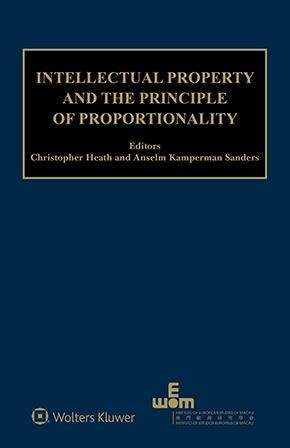
Intellectual Property and the Principle of Proportionality, edited by Christopher Heath and Anselm Kamperman Sanders (Kluwer Law International, October 2026), is the first volume to trace that principle across the whole IP system rather than one doctrine at a time — from its roots in GATT and TRIPS and in EU general principles of law, through patents, copyright and trade marks, to a dedicated chapter on abuse of rights before the Unified Patent Court.
In practice, that gives three groups of readers something they could not easily assemble from case law alone:
- Patent litigators preparing UPC injunction strategy get a systematic account of how "balance of harm" language has actually been applied, not just the bare text of Article 3 of the Enforcement Directive.
- IP counsel on cross-border copyright licensing can draw on the dedicated three-step test and fair use chapter when assessing exposure across several jurisdictions at once.
- Trade mark teams facing bad-faith filings get a comparative chapter on legislative responses to trade mark squatting, rather than having to reconstruct the position jurisdiction by jurisdiction.
For academic and research law libraries building an IP and comparative law collection, this is a reference that keeps its value as UPC proportionality jurisprudence keeps developing case by case — not a single-doctrine monograph that a new ruling can make stale within a year.
CLNZ Books ships this title worldwide with the price covering delivery, accepts card and PayPal for individual orders, and can issue a pro-forma invoice for institutional and library purchase orders.
Q&A
Q: Why is proportionality suddenly central to UPC patent litigation?
A: Because the Court of Appeal has spent 2026 reading proportionality into the scope, timing and enforcement of injunctions, even in cases where an injunction is still granted — rather than treating it as a binary defence.
Q: Does the book only cover patents?
A: No — it covers proportionality across patents, copyright and trade marks, including a dedicated chapter on the copyright three-step test and fair use.
Q: Is this useful outside Europe?
A: Yes. The framework is built on GATT and TRIPS and written for an international, comparative readership, with contributors from multiple jurisdictions.
Q: Where can I buy Intellectual Property and the Principle of Proportionality?
A: It's available now from CLNZ Books, with worldwide shipping included and institutional ordering options via our Request a Quote page.