Palgrave Macmillan
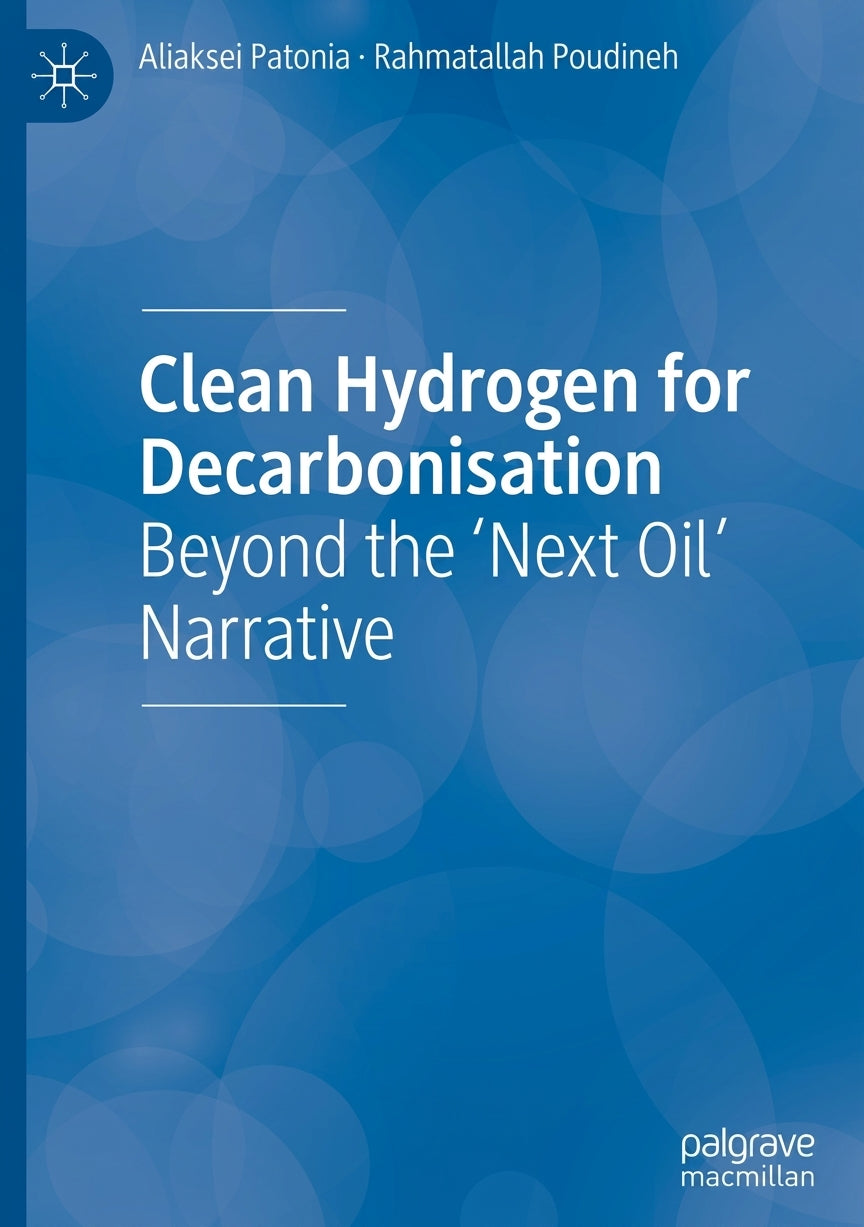
Clean Hydrogen for Decarbonisation: Beyond the 'Next Oil' Narrative
Clean Hydrogen for Decarbonisation: Beyond the 'Next Oil' Narrative
Quote response within 24h · Institutional invoicing available
Couldn't load pickup availability
Aliaksei Patonia, Rahmatallah Poudineh
ISBN: 9783032194411
Published: 17 May 2026
Format: Hardcover
Language: English
Publisher: Palgrave Macmillan
Description
Is clean hydrogen truly transformative for the global energy transition, or is it simply the latest energy hype? Written by two researchers at the Oxford Institute for Energy Studies, Clean Hydrogen for Decarbonisation delivers an evidence-based, sector-by-sector examination of hydrogen's realistic contribution to decarbonisation. The book moves from why hydrogen matters for climate policy, through production technologies and support schemes, to the infrastructure and regulatory questions that will determine whether hydrogen scales. It closes with a clear-eyed assessment of hydrogen's applications across power, transport, and heavy industry, concluding that hydrogen will be an important tool for cost-effective decarbonisation in hard-to-abate sectors, but will not replace oil's dominant role in the global energy system.
Key Features
- Sector-by-sector cost and technology comparison across power generation, road and rail transport, maritime shipping, aviation, steel, cement, and chemicals
- Practical assessment of hydrogen support schemes and subsidy design used by governments to bridge the cost gap with fossil alternatives
- Independent, non-promotional analysis from the Oxford Institute for Energy Studies, distinguishing genuine hydrogen demand from policy-driven hype
Coverage
The book covers: (1) the climate case and key technologies and costs of hydrogen production, including electrolysis and carbon-capture-based routes; (2) low-carbon hydrogen production support schemes, transportation, trade, and storage technologies; (3) applications in the power sector, road and rail transport, maritime and aviation transport, and in steel, cement, chemical, and high-heat industrial processes; and (4) the trade-offs and implementation challenges facing policymakers as they weigh hydrogen against alternative decarbonisation pathways.
About the Authors
Aliaksei Patonia is a Research Fellow at the Oxford Institute for Energy Studies, specialising in commercial hydrogen development, with research spanning energy economics, sustainable development, power-to-hydrogen technologies, and hard-to-abate sector applications.
Rahmatallah Poudineh is Head of the Electricity Research Programme at the Oxford Institute for Energy Studies. Trained as both an economist and an engineer, he researches power-sector regulation, renewable support mechanisms, and hydrogen markets.
Table of Contents
- Introduction
- Key Technologies and Costs of Hydrogen Production
- Low-Carbon Hydrogen Production Support Schemes
- Hydrogen Transportation and Trade
- Hydrogen Storage Technologies
- Hydrogen in the Power Sector
- Hydrogen in Road and Rail Transport
- Hydrogen for Maritime Transport
- Hydrogen in Aviation
- Hydrogen for Steel Production
- Hydrogen for Cement Production
- Hydrogen for Chemical Industry
- Hydrogen for High-Heat Processes
- Conclusions
Why buy this book?
Hydrogen strategy is one of the most contested questions in energy policy today, and library patrons, energy analysts, and institutional researchers need an independent reference that separates the technically credible use cases from the hype. This is the only current handbook that walks through hydrogen's economics sector by sector, from the Oxford Institute for Energy Studies, one of the most respected independent energy research institutions in the world. It is an essential acquisition for any collection supporting energy policy, engineering, or sustainability research.
Keywords
clean hydrogen, green hydrogen, decarbonisation, electrolysis, hydrogen economy, hydrogen policy, energy transition, hard-to-abate sectors, hydrogen storage, hydrogen transport, low-carbon hydrogen, Oxford Institute for Energy Studies
Target Audience
Energy policy researchers, energy economists, engineers, government and regulatory professionals, academic and institutional libraries, industry analysts
Genre
Energy Policy, Hydrogen Production, Decarbonisation, Energy Economics
Q&A
Q: Is clean hydrogen actually cost-competitive with fossil fuels yet?
A: Not broadly. The book shows that outside a handful of subsidised or niche applications, hydrogen remains more expensive than incumbent fossil-based processes, and it explains where and when that gap is likely to close.
Q: Which industries have the strongest case for hydrogen adoption?
A: The book identifies steel, cement, chemicals, and other hard-to-abate industrial processes, along with parts of heavy transport, as the sectors with the clearest long-term case, rather than broad economy-wide use.
Q: How does this book differ from other hydrogen economy titles?
A: It offers an independent, evidence-based assessment from the Oxford Institute for Energy Studies rather than an industry-promotional or purely technical treatment, explicitly weighing hydrogen's realistic role against the surrounding policy hype.
Q: Does the book cover hydrogen policy and subsidy design?
A: Yes. A dedicated chapter examines low-carbon hydrogen production support schemes and how governments are structuring subsidies to close the cost gap with fossil alternatives.
Q: Where can I buy Clean Hydrogen for Decarbonisation?
A: You can order it directly from CLNZ Books, with worldwide shipping included in the price.
📘 Learn more about shipping, delivery times, and returns, see our FAQ here
📦 New to ordering with us? See our How to Order guide for payment, shipping, and institutional order options.