Routledge
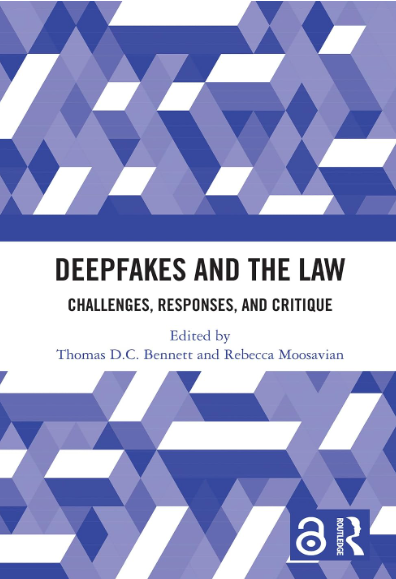
Deepfakes and the Law: Challenges, Responses, and Critique
Deepfakes and the Law: Challenges, Responses, and Critique
Quote response within 24h · Institutional invoicing available
Couldn't load pickup availability
Editors
Thomas D.C. Bennett, Rebecca Moosavian (Editors)
ISBN: 9781032964539
Published: September 2026
Format: Hardcover
Language: English
Publisher: Routledge
Availability: Low stock at the supplier.
Description
This collection offers the first sustained, multidisciplinary legal analysis of deepfakes and their far-reaching consequences. Deepfake technology has moved from fringe curiosity to a global social, political and legal problem: the ability to fabricate hyper-realistic images, audio and video is now available to anyone with a smartphone. Its most prevalent and damaging use remains non-consensual sexually explicit content targeting women, yet deepfakes also fuel political disinformation, destabilise democratic processes, enable fraud and identity theft, and contribute to a post-truth climate in which the authenticity of all digital evidence becomes contestable.
Key Features
- Examines how synthetic media challenges assumptions about privacy, image rights, evidential truth and democratic integrity
- Explores the impact of deepfakes on the individual dignity of both the living and the dead
- Analyses the structural difficulties deepfakes pose for courts, regulators and lawmakers
- Brings together theoretical, doctrinal and comparative insights on a fragmented regulatory landscape
Coverage
Three parts: Deepfakes, Imagery and Privacy (privacy and misuse of private information, deepfake pornography and human rights, constitutional protection of personal identifiers, and copyright takedowns); Deepfakes, Disinformation and Truth (trust in user-generated evidence, lessons from false advertising law, democracy and neo-republican unfreedom, and electoral integrity in India); and Deepfakes and Death (digital immortality and voice cloning of the deceased). Practical applications include evaluating takedown routes, regulatory design and evidential reliability.
About the Authors
Edited by Thomas D.C. Bennett and Rebecca Moosavian, with contributions from an international array of scholars including Aislinn O’Connell, Jill Marshall, Rachel Maguire, Anna Hovsepyan, Ogulcan Ekiz, Anne Hausknecht, Jyothsna Gurumurthy, Jesse Michael Bachir, Subhajit Basu, Garima Saxena, Conor McGahon and Başak Bak.
Table of Contents
Introduction. Part One: Deepfakes, Imagery, and Privacy – 1. Triangulating Deepfakes as a Privacy Problem; 2. Saving ‘Souls’? How Misuse of Private Information Could Protect Targets of Intrusive Deepfakes; 3. Deepfake Pornography: Legal and Human Rights Responses; 4. The Need for Constitutional Protection of Personal Identifiers in the Age of Deepfakes; 5. Taking Down Deepfakes Through Copyright Law. Part Two: Deepfakes, Disinformation and Truth – 6. The Impact of Deepfakes on Trust in User-Generated Evidence; 7. Regulating Deepfake Harms: Lessons from False Advertising Law; 8. Deepfakes, Democracy, and Disinformation: Neo-Republican Unfreedom; 9. Deepfakes and Democratic Vulnerabilities: Safeguarding Electoral Integrity in India. Part Three: Deepfakes and Death – 10. The Challenges of Digital Immortality and Deepfakes; 11. Voice Cloning of the Deceased.
Why buy this book?
It is a timely and vital volume for scholars, jurists and legislators concerned with the future of truth, autonomy and accountability in an increasingly synthetic world, and it articulates the need for more coherent, principled governance of synthetic media.
Keywords
deepfakes, synthetic media, privacy law, image rights, non-consensual deepfake pornography, disinformation, electoral integrity, digital evidence, voice cloning, AI regulation
Target Audience
Lawyers, Legal Academics, Academics, policymakers
Genre
Technology Law, Privacy Law, Artificial Inteligence
Q&A
What legal problems do deepfakes raise?
They challenge assumptions about privacy, image rights, evidential truth and democratic integrity, and are used for non-consensual explicit content, political disinformation, fraud and identity theft.
Can copyright or privacy law be used to take down deepfakes?
The book includes chapters on misuse of private information as a protection for targets of intrusive deepfakes and on taking down deepfakes through copyright law.
How do deepfakes affect evidence in courts?
One chapter examines the impact of deepfakes on trust in user-generated evidence, and the introduction notes how they make the authenticity of all digital evidence contestable.
Does the book address elections and democracy?
Yes. Chapters examine deepfakes, democracy and disinformation, and the safeguarding of electoral integrity in India.
What does the book say about deepfakes and death?
Part Three considers digital immortality and the voice cloning of the deceased, and the dignity of the living and the dead.
Where can I buy Deepfakes and the Law: Challenges, Responses, and Critique?
You can order it from CLNZ Books at clnzbooks.com. Pay by card or PayPal, or request a quote for institutional invoicing.
📘 Learn more about shipping, delivery times, and returns, see our FAQ here
📦 New to ordering with us? See our How to Order guide for payment, shipping, and institutional order options.