Cambridge University Press
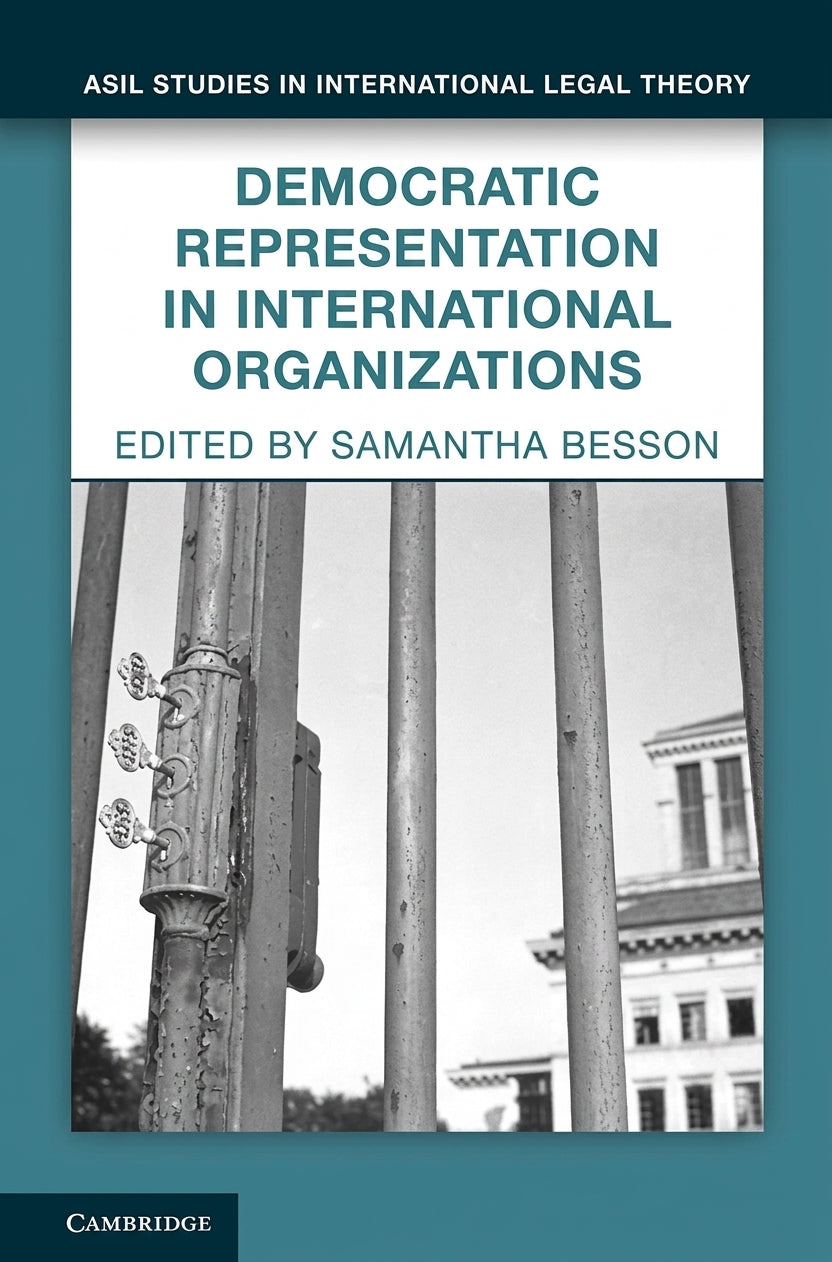
Democratic Representation in International Organizations
Democratic Representation in International Organizations
Quote response within 24h · Institutional invoicing available
Couldn't load pickup availability
Samantha Besson (Editor)
ISBN: 9781009710541
Published: August 2026
Format: Hardcover
Language: English
Publisher: Cambridge University Press
Description
Do international organizations govern on behalf of the peoples of their member states, and can they fairly claim to represent them? Despite the central lawmaking role that international organizations now play in global governance, their democratic representativeness, and that of the states and institutions that make them up, has received surprisingly little sustained attention in legal scholarship. Edited by Samantha Besson of the Collège de France, Democratic Representation in International Organizations brings together leading theorists of global democracy and international lawyers to examine the question directly across three dimensions: representation in international organizations, representation through international organizations, and representation by international organizations. Published in Cambridge's ASIL Studies in International Legal Theory series, the volume combines theoretical chapters with closer studies of specific institutions, offering one of the first sustained English-language treatments to put democratic theory and international institutional law into direct dialogue.
Key Features
- First major English-language volume to bring global democracy theorists and international lawyers into direct dialogue on the democratic representativeness of international organizations
- Structured in three parts, representation in, through and by international organizations, giving readers both theoretical grounding and institution-specific analysis
- Contributions from a cross-disciplinary roster of scholars including Philip Pettit, Anne Peters, Pierre Rosanvallon and Terry Macdonald, alongside editor Samantha Besson
- Published in Cambridge's ASIL Studies in International Legal Theory series, maintaining the series' standard for rigorous theoretical engagement with international law
- Timely contribution to current debates on reforming multilateral institutions and strengthening their legitimacy amid growing scrutiny of global governance
Coverage
- Theoretical foundations of democratic representation in global governance
- Representation within the internal structures of international organizations
- Representation exercised through international organizations on behalf of states and peoples
- Representation exercised by international organizations themselves as global actors
- Institution-specific case studies examining representative claims in practice
- Debates on reform, accountability and legitimacy of multilateral institutions
About the Authors
Samantha Besson is Professor at the Collège de France, Paris, where she holds the Chair of Democracy and International Law. A leading scholar in the philosophy of international law and human rights, she has written extensively on legitimacy, sovereignty and democratic theory in the international legal order. This volume gathers fifteen chapters from contributors spanning political philosophy and international law, including Philip Pettit, Jacob K. Cogan, Anne Peters, Jochen von Bernstorff, Terry Macdonald and Pierre Rosanvallon, among others, with a concluding chapter by Olivier de Frouville.
Table of Contents
- Democratic Representation in, through, and by International Organizations: An Introduction (Samantha Besson)
2. The Dawn or Dusk of Democratic Representation (Pierre Rosanvallon)
Part I: Democratic Representation in International Organizations (Philip Pettit, Jacob K. Cogan, Francis Cheneval, Marie-Clotilde Runavot)
Part II: Democratic Representation through International Organizations (Marieke Louis, Melissa J. Durkee, Anne Peters, Jochen von Bernstorff)
Part III: Democratic Representation by International Organizations (Terry Macdonald, Samantha Besson and José Luis Martí, Édouard Dubout and Dominique Ritleng, Évelyne Lagrange)
Conclusions (Olivier de Frouville)
Further Reading & Related Titles
Want to see how this volume connects to the current debate on multilateral reform? Read our article on the CLNZ Books blog, “As the UN80 Reform Drive Enters a New Phase, a New Volume Asks Who International Organizations Really Represent”
Looking for more? Visit and browse our full Law Catalogue by clicking here, a curated selection of titles for law libraries, research centres and legal professionals worldwide.
Why buy this book?
International organizations now sit at the center of debates about the legitimacy of global governance, from Security Council reform to the accountability of UN agencies and regional bodies. For law libraries supporting courses or research in international institutional law, global governance or political theory, this volume fills a genuine gap: there has been surprisingly little sustained scholarship asking directly whether international organizations are democratically representative, and this is one of the first English-language works to do so systematically.
Keywords
international organizations, democratic representation, global governance, international institutional law, Samantha Besson, UN reform, international legal theory, multilateral institutions
Target Audience
International law and political theory academics, researchers in global governance and international institutions, policymakers and diplomats working with international organizations, law and political science libraries
Genre
Public International Law, International Organizations, International Legal Theory
Q&A
What question does this book set out to answer?
It asks whether international organizations can be considered democratic representatives of the peoples of their member states, examining representation in, through and by these institutions across fifteen chapters.
Who edited this volume and who are the contributors?
It is edited by Samantha Besson of the Collège de France, with contributions from scholars including Philip Pettit, Anne Peters, Pierre Rosanvallon, Jacob K. Cogan and Terry Macdonald, among others.
Why does democratic representation in international organizations matter now?
International organizations play an increasingly central role in global lawmaking and governance, yet debates over reforming bodies such as the UN Security Council and other multilateral institutions have intensified scrutiny of how representative they actually are of their member states' peoples.
Is this a theoretical or practical study of international organizations?
Both: it combines chapters grounded in democratic and political theory with closer, institution-specific analysis, making it useful for readers approaching the subject from political philosophy as well as international institutional law.
Where can I buy Democratic Representation in International Organizations?
You can order it directly from CLNZ Books, with worldwide shipping and institutional invoicing available for libraries and research centers.
📘 Learn more about shipping, delivery times, and returns, see our FAQ here
📦 New to ordering with us? See our How to Order guide for payment, shipping, and institutional order options.