Springer
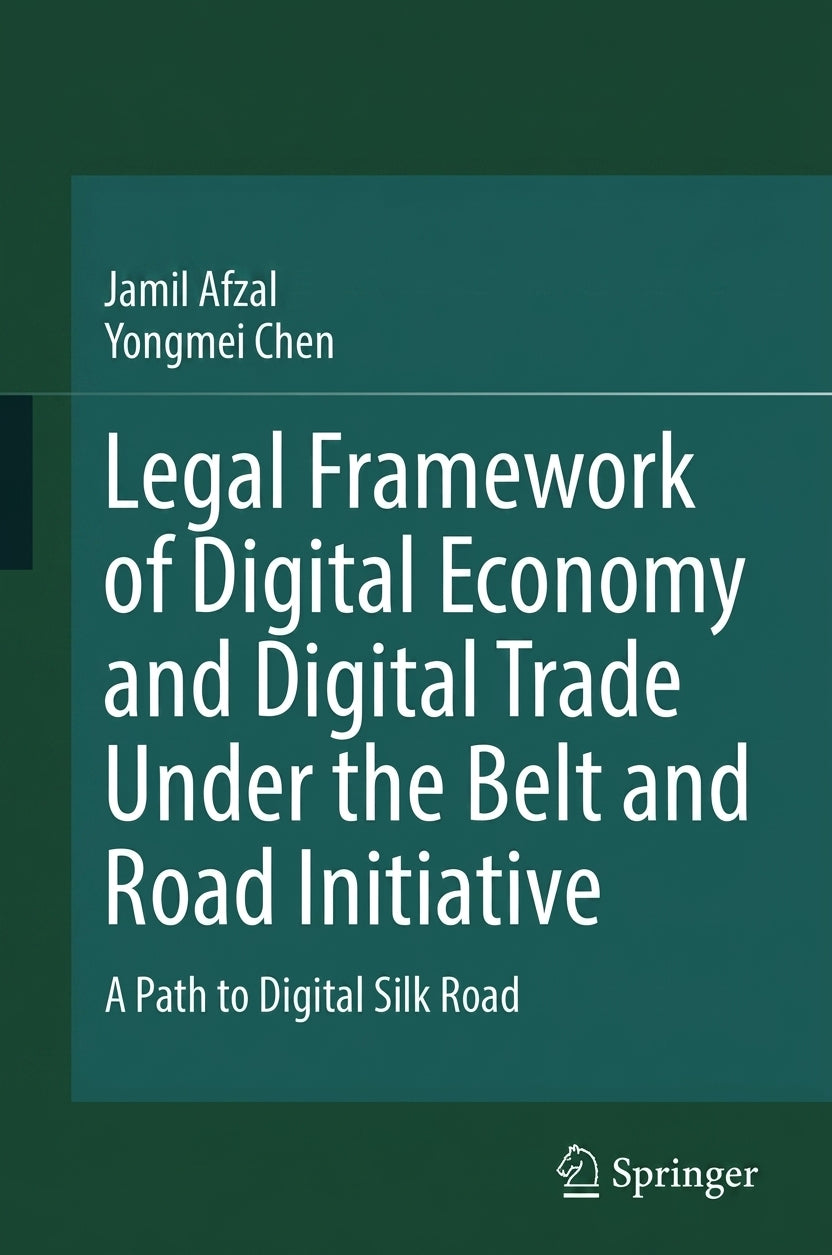
Legal Framework of Digital Economy and Digital Trade Under the Belt and Road Initiative
Legal Framework of Digital Economy and Digital Trade Under the Belt and Road Initiative
Quote response within 24h · Institutional invoicing available
Couldn't load pickup availability
Authors: Jamil Afzal, Yongmei Chen
ISBN: 9789819244430
Published: August 7, 2026
Format: Hardcover
Language: English
Publisher: Springer Singapore
Description
This book examines the digital dimension of China's Belt and Road Initiative (BRI) — the Digital Silk Road — and the legal framework governing digital trade, e-commerce, and cross-border digital governance among participating states across Asia, Europe and Africa. Moving beyond the BRI's familiar physical infrastructure story, it addresses the legal challenges that come with expanding cross-border digital activity: data protection, cybersecurity, digital trade rules, and the rights and obligations of states, companies and individuals. The chapters move from foundational concepts — the evolution of China's digital economy and its integration with the BRI — through core legal dimensions such as data governance, digital dispute resolution and fintech regulation, to forward-looking themes including green digital economy initiatives and a proposed common legal structure for digital trade.
Key Features
Direct legal analysis of data sovereignty, cross-border data transactions and digital dispute resolution mechanisms across BRI jurisdictions, useful for cross-border data governance decisions.
Dedicated coverage of fintech regulation and digital financial inclusion within the Digital Silk Road, relevant to payments and digital infrastructure planning.
A proposed common legal framework for digital trade that maps directly onto regulatory and market-entry strategy across BRI participant states.
Coverage
Opens with China's digital economy initiatives and the regulatory framework of the Digital Silk Road, then examines how the Digital Silk Road integrates into the wider BRI and contemporary theories of digitalization. Core chapters cover the international legal frameworks advancing the digital economy, the challenges facing digital economy regulation, digital dispute resolution mechanisms, and fintech innovation within the Digital Silk Road. Closing chapters address green digital economy initiatives, a prospective legal framework for digital economy and digital trade, and the geopolitical implications of the Digital Silk Road for global governance and power dynamics.
About the Authors
Dr. Jamil Afzal is an associate researcher at the China-ASEAN Law Research Center, School of International Law, Southwest University of Political Science & Law, Chongqing. He is Principal Ethical Editor at the International Research and Publishing Academy (IRAPA), an advocate on the roll of the Punjab Bar Council, and Executive Director at the Ahbab Lawyer Forum & Research Society. He specializes in digital law, the digital economy, the hydrogen economy and the legal phenomenon of digitalization, with over ten years in research and teaching at national and international institutions.
Yongmei Chen is affiliated with the School of International Law, Southwest University of Political Science and Law, Chongqing, China.
Table of Contents
1. Chinese Digital Economy Initiatives and Regulatory Framework of the Digital Silk Road
2. Leveraging Digital Silk Road Within the Belt and Road Initiative
3. Digital Silk Road and Contemporary Theory of Digitalization
4. Advancing the Digital Economy Under the Digital Silk Road: Legal Perspectives and International Frameworks
5. Scrutiny of Challenges Regarding the Digital Economy Within the Digital Silk Road
6. Digital Operations Legal Issues and Digital Dispute Resolution Mechanism
7. Digital Financial Inclusion and Fintech Innovations in DSR and Regulatory Issues
8. Green Digital Economy and Sustainable Legal Development
9. Prospective Legal Framework for Digital Economy and Digital Trade
10. Potential Legal and Geopolitical Implications of the Digital Silk Road: Power, Influence, and Global Governance
Why buy this book?
The digital economy — data, AI, platforms, payments, digital services — is now the central axis of international trade, and China is actively setting global standards for it through the Digital Silk Road, with direct effects across Asia, Africa, Europe and Latin America. This book gives a legal, chapter-by-chapter roadmap for that framework, essential reading for anyone making calls on digital regulation, trade agreements, technology infrastructure or data governance involving BRI jurisdictions.
Keywords
Belt and Road Initiative, Digital Silk Road, digital economy law, digital trade, data governance, cybersecurity law, fintech regulation, cross-border data, international economic law, China digital policy
Target Audience
Legal academics and researchers in international and trade law, digital regulation and data governance professionals, trade and technology policymakers, international business professionals, university and research libraries
Genre
Belt and Road Initiative, Digital Economy, International Law
Q&A
Where can I buy Legal Framework of Digital Economy and Digital Trade Under the Belt and Road Initiative?
You can order it directly from CLNZ Books, with worldwide shipping included in the price.
What is the Digital Silk Road?
It is the digital dimension of China's Belt and Road Initiative, covering cooperation on data, e-commerce, digital trade rules and cross-border technology infrastructure among participating states.
What legal issues does the book address?
Data protection and sovereignty, cybersecurity, digital trade regulation, cross-border digital dispute resolution, and fintech regulation across BRI jurisdictions.
Why does the Digital Silk Road matter beyond China and Asia?
China is using it to help set global standards for digital trade and governance, with direct implications for participating states across Africa, Europe and Latin America.
Who should read this book?
Legal academics and researchers in international and trade law, digital regulation professionals, trade policymakers, and business professionals assessing regulatory or data-governance exposure to BRI markets.
📘 Learn more about shipping, delivery times, and returns, see our FAQ here