Springer
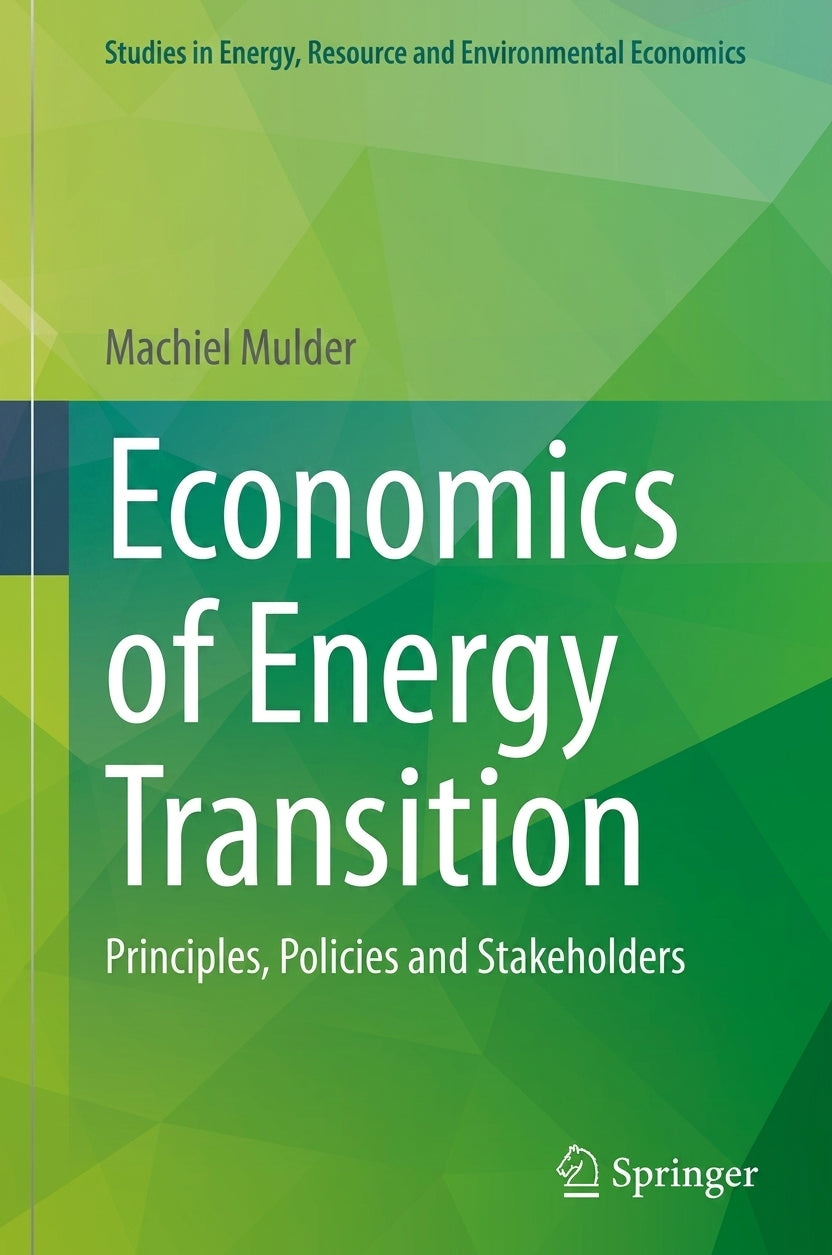
Economics of Energy Transition: Principles, Policies and Stakeholders
Economics of Energy Transition: Principles, Policies and Stakeholders
Quote response within 24h · Institutional invoicing available
Couldn't load pickup availability
Machiel Mulder (Author)
ISBN: 9783032290090
Published: 29 August 2026
Format: Hardcover
Language: English
Publisher: Springer
Description
This textbook provides a clear and comprehensive economic perspective on energy transition, showing that replacing fossil fuels with renewable energy is only part of the story. Building on the principle that optimal outcomes occur when coordination mechanisms between economic agents function effectively, the book examines when and how government intervention can improve the reliability and sustainability of the energy system. Readers gain a structured understanding of the motivations behind energy transition policy — resource depletion, energy security, environmental impacts and price volatility — and of the instruments governments use to pursue it, from capacity mechanisms and energy taxation to renewable support schemes and emissions trading. The final chapters turn to the stakeholders who make the transition happen in practice: producers, grid operators, consumers, shareholders, employees and customers.
Key Features
• A ready framework for evaluating the efficiency, effectiveness and distributional impact of capacity mechanisms, renewable support schemes and carbon taxation before they are adopted or revised
• A practical basis for assessing how emissions trading systems affect utilities, grid operators and industrial energy consumers
• Structured guidance for weighing the trade-offs between different renewable-support instruments (feed-in tariffs, auctions, certificate schemes) when designing or reviewing national energy policy
Coverage
Economic perspectives on energy transition; economic arguments for pursuing transition; efficient policy design; capacity mechanisms; energy taxation; renewable energy support schemes; emissions trading; the roles of producers, grid operators, consumers, shareholders, employees and customers; interdisciplinary insights from engineering, law and the social sciences.
About the Author
Machiel Mulder is Professor of Energy Economics at the Faculty of Economics and Business, University of Groningen, where he directs the Centre for Energy Business and Economics Research and the Energy Programme of the University of Groningen Business School. He has published extensively on energy market regulation and economics, including the Springer title Regulation of Energy Markets.
Table of Contents
1. Economics of Energy Transition: An Introduction
2. Economic Perspective on Energy Transition
3. Economic Arguments for Energy Transition
4. Realising Energy Transition in an Efficient Way
5. Contribution of Stakeholders to Energy Transition
6. Concluding Remarks
Why buy this book?
Energy transition is discussed everywhere, but rigorous economic treatment of why and how to intervene is harder to find. This textbook gives libraries and energy departments a single, coherent economic framework that connects policy motivation to policy design to stakeholder impact — making it equally useful as a course text and as a reference for staff advising on energy policy.
Keywords
energy transition economics, energy policy, capacity mechanisms, energy taxation, renewable support schemes, emissions trading, energy market regulation, energy security, decarbonisation policy
Target Audience
Academics, Policy practitioners, energy economics students, utility and grid-operator professionals, energy market analysts
Genre
Energy Policy, Renewable Energy, Energy Economics
Q&A
What does "Economics of Energy Transition" by Machiel Mulder cover?
It provides a comprehensive economic framework for energy transition, covering the motivations for policy intervention, the design and evaluation of policy instruments such as capacity mechanisms, energy taxation, renewable support schemes and emissions trading, and the roles of the stakeholders who implement the transition.
Does the book explain when government intervention in energy markets is justified?
Yes. It builds on the economic principle that intervention is warranted when coordination mechanisms between producers, consumers and other market participants fail to deliver reliable, sustainable outcomes on their own.
Which policy instruments does the book analyze in detail?
It analyzes capacity mechanisms, energy taxation, renewable energy support schemes (such as feed-in tariffs and auctions) and emissions trading systems, assessing each for efficiency, effectiveness and distributional impact.
Is this book suitable for policy practitioners as well as students?
Yes. While structured as a textbook for students and scholars of energy economics, its policy-instrument analysis and stakeholder chapters make it equally relevant for energy policy practitioners, regulators and utility professionals.
Where can I buy Economics of Energy Transition?
Economics of Energy Transition by Machiel Mulder is available now from CLNZ Books, with pricing that includes worldwide shipping and secure payment by card or PayPal.
📘 Learn more about shipping, delivery times, and returns, see our FAQ here
📦 New to ordering with us? See our How to Order guide for payment, shipping, and institutional order options.