CRC Press
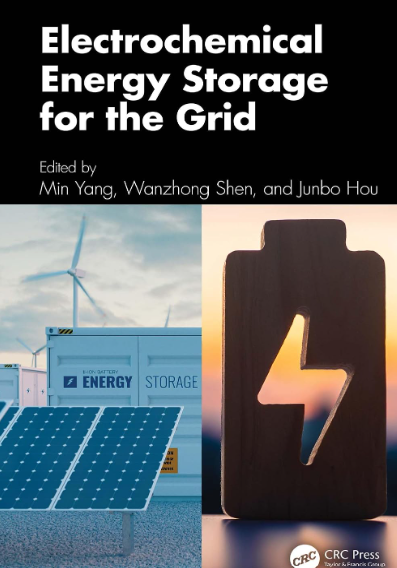
Electrochemical Energy Storage for the Grid
Electrochemical Energy Storage for the Grid
Quote response within 24h · Institutional invoicing available
Couldn't load pickup availability
Min Yang (Editor), Wanzhong Shen (Editor), Junbo Hou (Editor)
ISBN: 9781032795256
Published: September 6, 2026
Format: Hardcover
Language: English
Publisher: CRC Press
Description
As wind and solar reach record shares of electricity supply, matching intermittent generation to around-the-clock demand has become the central engineering challenge of the grid. This volume delivers a comprehensive review of the electrochemical storage technologies being deployed to solve it — from mature lead-acid systems to next-generation lithium-air, lithium-sulfur and metal-air batteries, hydrogen generation via water electrolysis, and solid oxide fuel cells — alongside the fundamentals engineers and planners need to evaluate each technology for grid-scale deployment.
Key Features
- Compares the full landscape of electrochemical storage options side by side, from lead-acid to lithium-air, lithium-sulfur and metal-air batteries, so grid planners can match technology to application
- Walks through hydrogen generation via water electrolysis and fuel-cell pathways as long-duration storage options for renewables-heavy grids
- Addresses safety-critical engineering questions directly, including lithium-ion thermal runaway, a leading cause of grid-battery fire incidents
Coverage
Lead-acid batteries for grid storage; lithium-ion thermal runaway and safety; lithium-air and lithium-sulfur batteries; metal-air batteries; hydrogen generation via water electrolysis; fuel cells and solid oxide fuel cells for grid applications.
About the Editors
Min Yang, Wanzhong Shen and Junbo Hou are researchers and engineers specializing in electrochemical energy storage and its application to renewable-heavy grid systems.
Table of Contents
- Lead-Acid Batteries
- Lithium-Ion Thermal Runaway
- Lithium-Air and Lithium-Sulfur Batteries
- Metal-Air Batteries
- Hydrogen Generation via Water Electrolysis
- Fuel Cells
- Solid Oxide Fuel Cells for Grid Applications
Why buy this book?
With grid-scale battery storage capacity reaching record levels worldwide as utilities race to firm up renewable generation, this volume gives engineering faculties, utility R&D libraries and policy institutions a single, technology-by-technology reference for evaluating electrochemical storage options — including the safety questions utilities cannot afford to overlook.
Keywords
electrochemical energy storage, grid-scale batteries, lithium-ion safety, metal-air batteries, hydrogen electrolysis, fuel cells, renewable energy integration
Target Audience
Electrical and energy storage engineers, utility R&D and grid-planning teams, renewable energy industry practitioners, academic libraries in electrical engineering and energy science
Genre
Energy Storage, Renewable Energy, Grid Engineering
Q&A
Why is electrochemical energy storage critical for today's grid?
As wind and solar supply a growing share of electricity, grid operators need storage that can shift that intermittent generation to meet demand around the clock — electrochemical storage is the leading technology family for doing so.
Does the book cover hydrogen as well as batteries?
Yes — it dedicates chapters to hydrogen generation via water electrolysis and to fuel cells, including solid oxide fuel cells for grid applications.
Does it address battery safety risks?
Yes — lithium-ion thermal runaway, a major safety concern for grid-scale battery installations, has a dedicated chapter.
Is this book suited for engineers only, or also for planners and policymakers?
Both — it combines technical fundamentals with the practical comparisons utility planners and policy teams need to evaluate storage options.
Where can I buy Electrochemical Energy Storage for the Grid?
Directly from CLNZ Books, with worldwide shipping and secure payment by credit card or PayPal.
📘 Learn more about shipping, delivery times, and returns, see our FAQ here
📦 New to ordering with us? See our How to Order guide for payment, shipping, and institutional order options.