Routledge
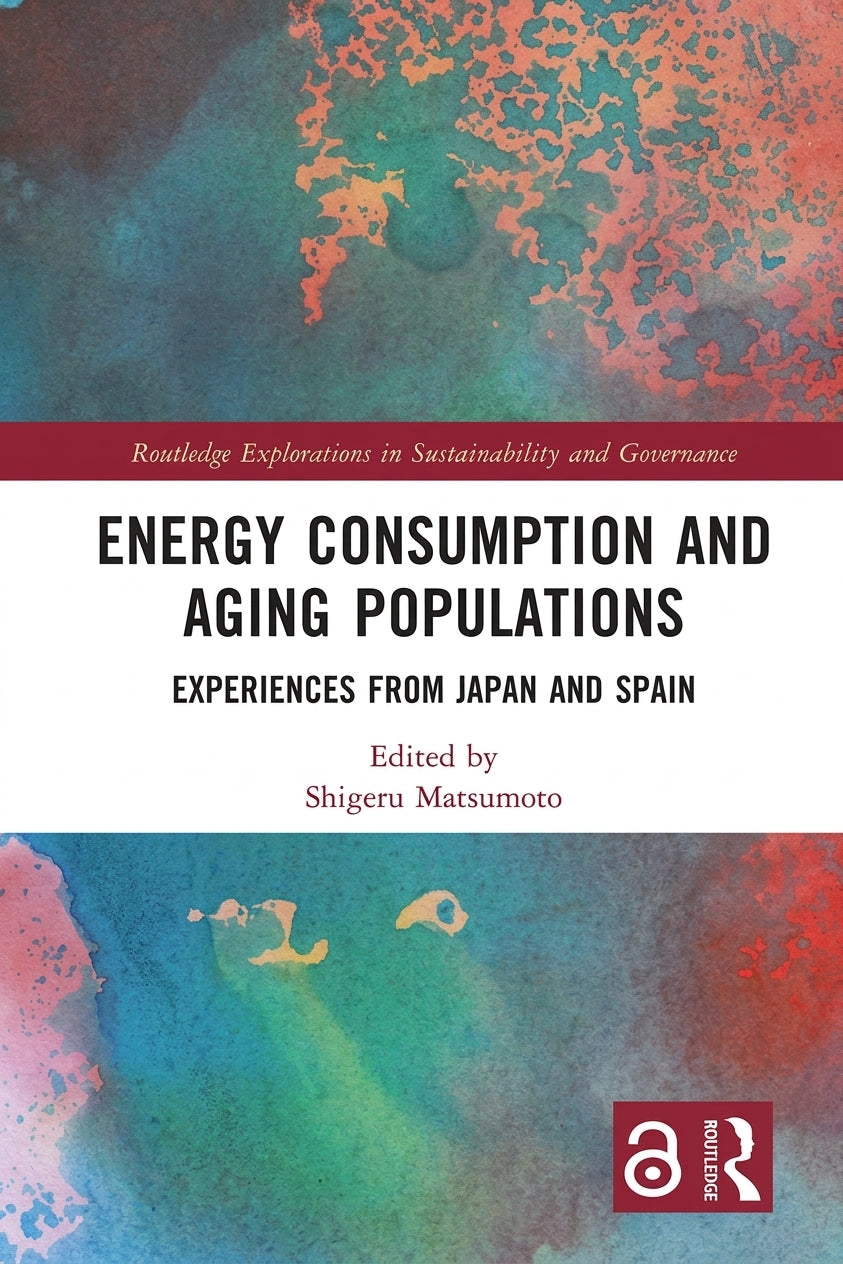
Energy Consumption and Aging Populations: Experiences from Japan and Spain
Energy Consumption and Aging Populations: Experiences from Japan and Spain
Quote response within 24h · Institutional invoicing available
Couldn't load pickup availability
Shigeru Matsumoto (Editor)
ISBN: 9781032785844
Published: July 2026
Format: Hardcover
Language: English
Publisher: Routledge
Description
Population aging is reshaping energy demand across the industrialized world, and this volume is one of the first to place that shift under sustained empirical scrutiny. Drawing on household-level data from Japan and Spain — two of the most rapidly aging societies among OECD economies — the contributors trace how retirement, changing time-use patterns, and shifting household composition alter residential energy consumption, mobility choices, and healthcare-related energy demand.
The volume moves from conceptual modelling of the aging–energy relationship to detailed empirical case studies, covering pension system pressures, residential sustainability policy, transportation behaviour among older cohorts, and the resource implications of longer, more sedentary lifespans. Comparative chapters set Japanese and Spanish experiences side by side, allowing readers to separate country-specific policy effects from broader demographic drivers.
For energy economists, demographers, and policymakers working on long-range emissions and infrastructure planning, this is a rare data-grounded treatment of a variable — demographic aging — that most energy transition models still treat as a footnote.
Key Features
- Combines theoretical modelling with empirical household-level evidence from Japan and Spain
- Direct comparative framework between two leading aging societies with different welfare and housing systems
- Dedicated chapters on residential energy use, transportation, and healthcare-related energy demand
- Published as part of the Routledge Explorations in Sustainability and Governance series
- Open-access edition available, supporting classroom and institutional use alongside the print edition
Coverage
Population trends and pension system impacts; conceptual models linking demographic aging to societal energy use; residential sector sustainability policy; healthcare service accessibility projections; transportation and mobility among older populations; energy resources and lifestyle change in aging economies.
About the Authors
Shigeru Matsumoto is Professor at the College of Economics, Aoyama Gakuin University, Japan, where his research focuses on environmental and energy economics, with particular attention to household behaviour and policy evaluation. He is joined in this volume by an international group of contributing researchers working across energy economics, demography, and public policy in Japan and Spain.
Table of Contents
1. Introduction: Population Aging and the Energy Transition. 2. Aging, Pensions, and Long-Run Energy Demand. 3. Conceptual Models of Aging and Societal Energy Use. 4. Residential Sector Policy in Aging Societies. 5. Healthcare Access, Aging, and Energy Infrastructure. 6. Transportation and Mobility Among Older Populations. 7. Comparative Perspectives: Japan and Spain. 8. Conclusions and Policy Implications.
Why buy this book?
Most energy transition research treats demographic change as background noise. This volume treats it as a central variable, backed by comparative household data from two countries at the frontier of global population aging. For institutions building out energy policy, demography, or environmental economics collections, it fills a specific and growing gap.
Keywords
energy consumption, aging population, Japan energy policy, Spain energy policy, elderly household energy use, demographic transition, residential energy demand, sustainability governance, environmental economics, energy policy research
Target Audience
University libraries, energy policy researchers, demography and gerontology departments, environmental economics programs, government energy and welfare agencies, sustainability research institutes
Genre
Academic Reference, Energy Policy, Environmental Economics, Social Science
Q&A
Q: How does an aging population affect a country's energy consumption?
A: Aging shifts the composition of energy demand — reducing commuting-related transport energy while increasing residential heating, healthcare, and home-based energy use, a pattern documented in this volume through Japanese and Spanish household data.
Q: Why are Japan and Spain used as comparative case studies for energy and demographic research?
A: Both countries rank among the most rapidly aging societies in the OECD, but differ in housing stock, welfare systems, and climate, making them a useful natural comparison for isolating demographic effects on energy demand.
Q: What is the relationship between pension systems and long-term energy demand?
A: Pension income and retirement timing shape household time-use and spending patterns, which in turn affect residential energy consumption and mobility — a relationship examined in detail in this book's early chapters.
Q: Does population aging increase or decrease overall energy demand?
A: The effect is mixed and sector-dependent: transport energy use tends to fall with retirement, while residential and healthcare-related energy use tends to rise, with the net effect varying by country and policy context.
Q: Is this book relevant to energy transition and net-zero planning?
A: Yes — the volume argues that demographic aging is an underweighted variable in most energy transition models and provides empirical grounding for incorporating it into long-range infrastructure and emissions planning.
📘 Learn more about shipping, delivery times, and returns, see our FAQ here
📦 New to ordering with us? See our How to Order guide for payment, shipping, and institutional order options.