Edward Elgar Publishing
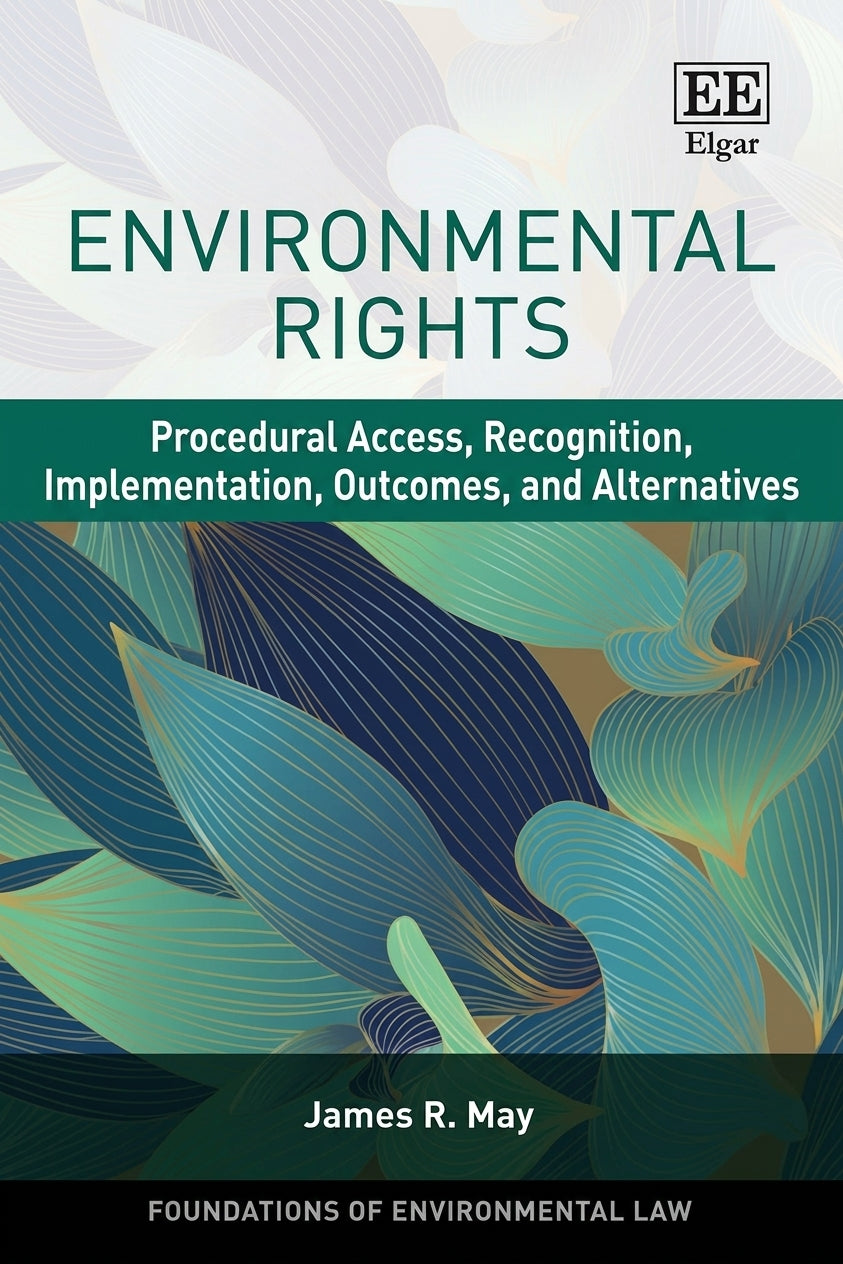
Environmental Rights: Recognition, Implementation, Outcomes and Alternatives
Environmental Rights: Recognition, Implementation, Outcomes and Alternatives
Quote response within 24h · Institutional invoicing available
Couldn't load pickup availability
Author
James R. May
ISBN: 9781803923499
Published: July 2026
Format: Hardcover
Language: English
Publisher: Edward Elgar Publishing
Description
This comprehensive work examines how environmental rights have emerged across legal systems and constitutions worldwide, from antiquity-adjacent common law doctrines through the wave of modern constitutional environmental rights provisions. Using empirical research, James R. May analyses how these rights translate — or fail to translate — into functional and practical improvements in environmental outcomes.
The book addresses the principal implementation barriers, including judicial reluctance and textual ambiguity, while exploring alternative legal frameworks that fill the gap when environmental rights prove absent or unenforceable. These include socioeconomic rights (life, dignity, health), rights of Nature, participation rights, and sustainability protections.
Key Features
Empirically grounded analysis of how environmental rights translate into enforceable outcomes across jurisdictions worldwide.
Identifies the principal implementation barriers, including judicial reluctance and textual ambiguity in constitutional and statutory environmental rights provisions.
Surveys alternative legal pathways — socioeconomic rights, dignity rights, rights of Nature, procedural participation rights, and sustainability protections — for jurisdictions where environmental rights themselves prove unenforceable.
Twelve chapters moving from the emergence of environmental rights through implementation and outcomes to doctrinal alternatives, closing with climate rights and subnational recognition.
Coverage
The global emergence and constitutional recognition of environmental rights.
Implementation outcomes and the barriers — judicial and textual — that blunt their practical effect.
Socioeconomic rights, dignity rights, and rights of Nature as functional alternatives where environmental rights are absent or unenforceable.
Climate rights, procedural protections, and subnational and local recognition of environmental rights.
About the Author
James R. May is a leading scholar of environmental rights and environmental constitutionalism. His previous work includes Human Rights and the Environment (with Erin Daly) and Global Environmental Constitutionalism, and his research is widely cited in comparative environmental rights litigation and scholarship.
Table of Contents
Part I: The Emergence and Recognition of Environmental Rights.
Part II: Implementation — Judicial Reluctance, Textual Ambiguity, and Practical Outcomes.
Part III: Alternatives — Socioeconomic Rights, Dignity Rights, and Rights of Nature.
Part IV: Climate Rights, Procedural Protections, and Subnational Recognition.
Why buy this book?
With environmental rights litigation and constitutional reform accelerating worldwide, this book gives academic libraries, environmental and human rights scholars, and policymakers an empirically grounded reference for understanding what makes environmental rights work — and what to rely on when they do not. A timely addition to any international or environmental law collection.
Keywords
environmental rights, environmental constitutionalism, climate rights, rights of nature, human rights and the environment, sustainability law, international environmental law
Target Audience
Environmental and human rights law academics, law libraries, policymakers, environmental litigators, sustainability practitioners
Genre
International Law, Environmental Law, Human Rights
Q&A
What are environmental rights and how are they recognized globally?
Environmental rights are legal entitlements — constitutional, statutory, or human-rights based — to a clean, healthy or sustainable environment. This book traces their emergence and recognition across legal systems and constitutions worldwide.
Why do environmental rights often fail to translate into enforceable protections?
Implementation is frequently blunted by judicial reluctance to enforce open-textured provisions and by ambiguity in how those provisions are drafted — both examined in detail in this book's empirical analysis.
What is the difference between environmental rights and rights of Nature?
Environmental rights are typically held by people, while rights of Nature vest legal standing in natural entities themselves; the book examines rights of Nature as one of several alternative frameworks when conventional environmental rights prove unenforceable.
How does climate change affect the recognition of environmental rights?
Climate change has accelerated the recognition of climate-specific rights and strengthened litigation invoking environmental and human rights frameworks, a development this book addresses directly.
Where can I buy Environmental Rights: Recognition, Implementation, Outcomes and Alternatives?
This title is available now from CLNZ Books, with worldwide shipping and secure payment by card or PayPal.
📘 Learn more about shipping, delivery times, and returns, see our FAQ here
📦 New to ordering with us? See our How to Order guide for payment, shipping, and institutional order options.