CRC Press
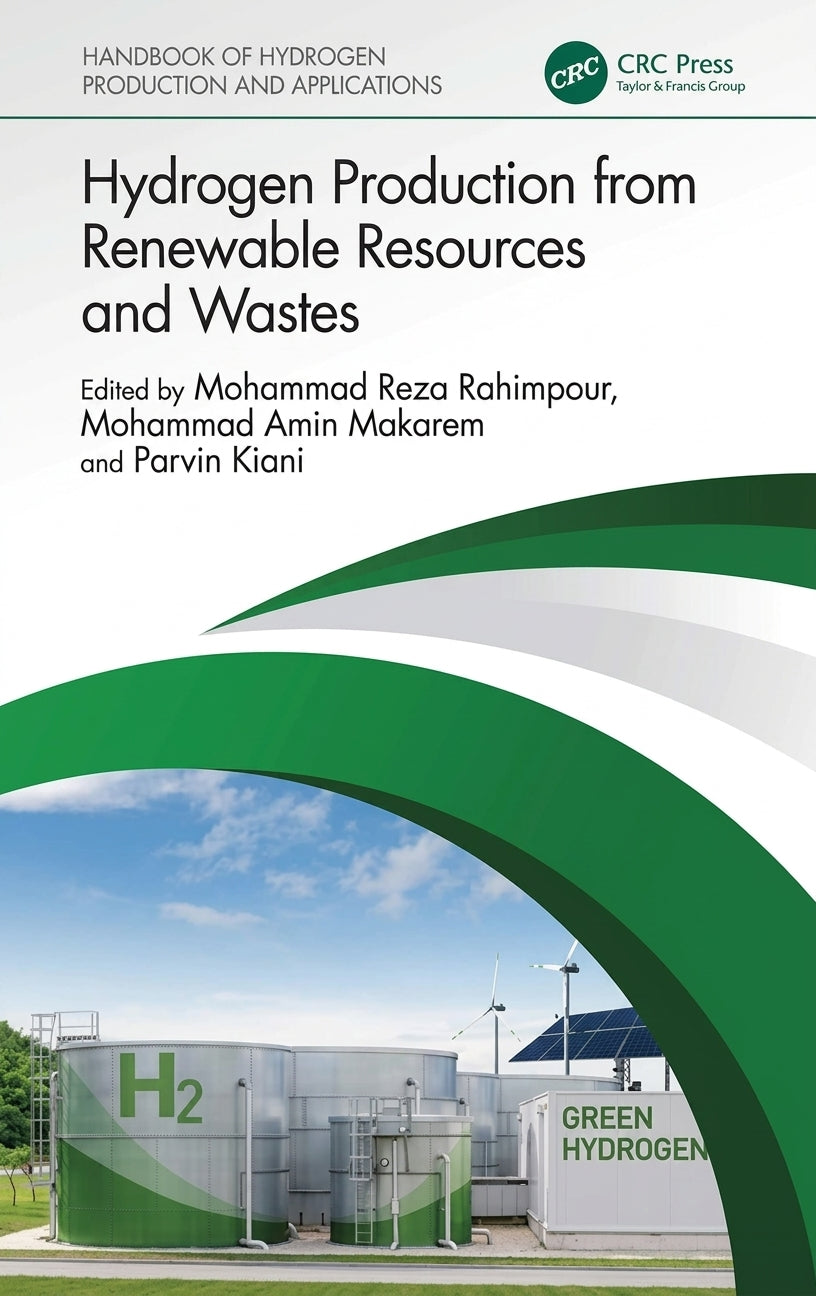
Hydrogen Production from Renewable Resources and Wastes
Hydrogen Production from Renewable Resources and Wastes
Quote response within 24h · Institutional invoicing available
Couldn't load pickup availability
Editors: Mohammad Reza Rahimpour, Mohammad Amin Makarem, Parvin Kiani
ISBN: 9781032465616
Published: 2026
Format: Paperback
Language: English
Publisher: CRC Press
Description
This book provides readers with a comprehensive overview of the processes and technologies utilized for producing hydrogen from renewable sources. It discusses common methods like gasification, pyrolysis, and liquefaction, along with novel methods like water thermochemical splitting, biophotolysis, biological water-gas shift reaction, and fermentation processing. The application of various renewable sources, including wind, solar, and geothermal energy, is covered in detail. Part of the multivolume Handbook of Hydrogen Production and Applications, this standalone book guides researchers in chemical, environmental and energy engineering.
Key Features
Introduces water splitting conversion processes for hydrogen production in detail, alongside different pyrolysis, gasification and liquefaction processes for hydrogen generation. Covers different biomass and waste sources for producing hydrogen, and discusses biochemical conversion methods including biophotolysis and fermentation. Provides the application of solar, hydropower and geothermal renewable energy sources in hydrogen production.
Coverage
Fourteen chapters organized in four sections: Water Splitting Conversion Processes (electrolysis, thermochemical splitting), Biomass and Wastes Thermochemical Conversion Processes (pyrolysis of lignin, sewage sludge and municipal biomass, gasification of lignin and sewage sludge, liquefaction of algal material), Biomass Biochemical Conversion Processes (biophotolysis, biological water-gas shift reaction, fermentation), and Other Renewable Resources for Hydrogen Production (solar, hydropower, and geothermal energy applications).
About the Editors
Mohammad Reza Rahimpour is a Distinguished Professor of Chemical Engineering at Shiraz University, Iran, with a PhD earned in collaboration with the University of Sydney. He leads a research group specializing in fuel processing technology, with particular focus on catalytic conversion of fossil and renewable fuels into valuable energy sources, and has specialized in hydrogen production technologies including steam methane reforming, water electrolysis and photocatalytic hydrogen production.
Mohammad Amin Makarem earned a PhD in chemical engineering at Shiraz University, with research interests in gas separation and purification, nanofluids, microfluidics, catalyst synthesis, reactor design and green energy.
Parvin Kiani earned a degree in chemical engineering at Shiraz University, with research focused on gas separation, clean energy and catalyst synthesis.
Table of Contents
Section I: Water Splitting Conversion Processes
1. Hydrogen Production through Electrolysis
2. Hydrogen Production from Water Thermochemical Splitting
Section II: Biomass and Wastes Thermochemical Conversion Processes
3. Pyrolysis Process for Conversion of Lignin to Hydrogen
4. Pyrolysis Process for Conversion of Sewage Sludge to Hydrogen
5. Pyrolysis of Municipal Biomass Wastes for Hydrogen Production
6. Gasification of Lignin for Hydrogen Production
7. Gasification of Sewage Sludge for Hydrogen Production
8. Liquefaction of Algal Material for Hydrogen Production
Section III: Biomass Biochemical Conversion Processes
9. Biophotolysis Process for Biomass Conversion to Hydrogen
10. Biological Water-Gas Shift Reaction Process for Hydrogen Production
11. The Fermentation Process for Biomass Conversion to Hydrogen
Section IV: Other Renewable Resources for Hydrogen Production
12. Application of Solar Energy in Hydrogen Production
13. Application of Hydropower Energy in Hydrogen Production: Tide, Wave, Water Flow, and Fall
14. Application of Geothermal Energy in Hydrogen Production
Why buy this book?
As part of the multivolume Handbook of Hydrogen Production and Applications, this book gives a single, structured reference covering essentially every renewable pathway to hydrogen — from electrolysis to biomass pyrolysis, gasification, fermentation and solar/geothermal-driven production. It's a strong core reference for chemical, environmental and energy engineering collections building out the hydrogen economy shelf.
Keywords
Hydrogen production, renewable hydrogen, water electrolysis, biomass pyrolysis, gasification, biophotolysis, green hydrogen technologies, geothermal hydrogen, solar hydrogen production, fermentation hydrogen
Target Audience
Chemical, environmental and energy engineering researchers and academics, hydrogen technology developers, academic libraries
Genre
Hydrogen Production, Chemical Engineering, Renewable Energy
Q&A
Where can I buy Hydrogen Production from Renewable Resources and Wastes?
You can order it directly from CLNZ Books, with worldwide shipping included in the price.
What hydrogen production methods does the book cover?
It covers electrolysis and thermochemical water splitting, pyrolysis, gasification and liquefaction of biomass and waste, biochemical methods like biophotolysis and fermentation, and renewable-energy-driven production via solar, hydropower and geothermal sources.
Is this book standalone or part of a series?
It's a standalone volume within the multivolume Handbook of Hydrogen Production and Applications.
Does the book cover waste-to-hydrogen pathways specifically?
Yes — multiple chapters address pyrolysis and gasification of sewage sludge and municipal biomass wastes for hydrogen production.
Who is this book written for?
Researchers and academics in chemical, environmental and energy engineering interested in the development and implementation of hydrogen production technologies.
📘 Learn more about shipping, delivery times, and returns, see our FAQ here