Hart Publishing
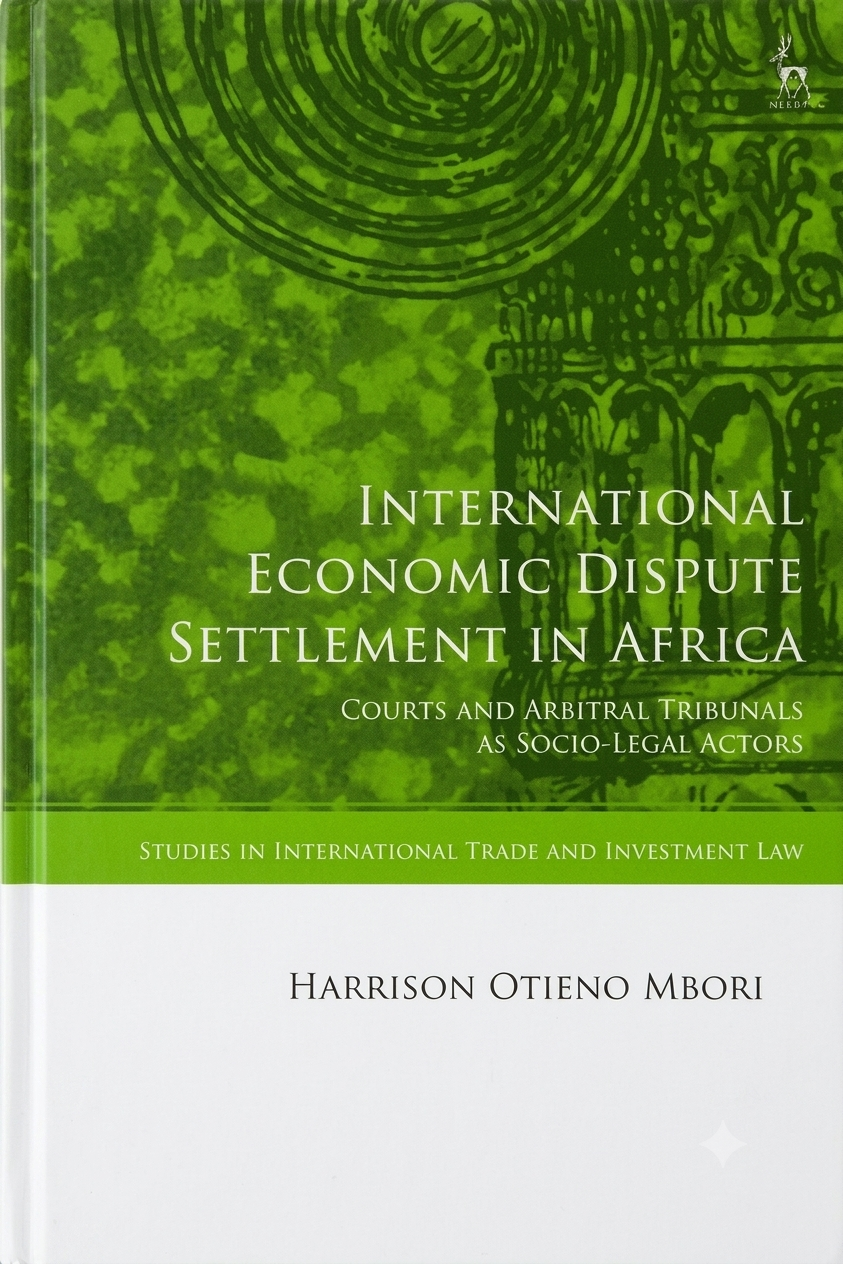
International Economic Dispute Settlement in Africa: Courts and Arbitral Tribunals as Socio-Legal Actors
International Economic Dispute Settlement in Africa: Courts and Arbitral Tribunals as Socio-Legal Actors
Quote response within 24h · Institutional invoicing available
Couldn't load pickup availability
Author
Harrison Otieno Mbori
ISBN: 9781509992874
Published: July 2026
Format: Hardcover
Language: English
Publisher: Hart Publishing
Description
This book fills the need for a comprehensive understanding of the law, institutions and processes shaping international economic dispute settlement within and beyond Africa. As African economies become increasingly central in global trade networks, understanding the continent's dispute resolution mechanisms is more crucial than ever. The book systematically analyses existing sub-regional courts and arbitral tribunals and their roles.
Key Features
Focuses on Africa's leading socio-legal actors involved in economic dispute settlement — African states, transnational corporations, African international law scholars, international organisations, and African emerging transnational actors in arbitration; covers the two main international economic dispute settlement divisions, international court litigation and international public and private arbitration; analyses sub-regional international economic courts and arbitrations through a Third World Approaches to International Law (TWAIL) lens and socio-legal actors methodology.
Coverage
Courts, arbitral tribunals and other dispute settlement mechanisms in Africa; the complexities of Africa's sub-regional international economic courts and tribunals; the OHADA Common Court of Justice and Arbitration; Africanization of international investment dispute settlement; international and African regional arbitration centers as competing nodes of governance; emerging transnational actors within the African international arbitration scene.
Three applications stand out for practitioners: navigating forum choice, using the comparative analysis of sub-regional courts, the OHADA CCJA, and competing arbitration centers to select the right venue for a cross-border African dispute; advising transnational corporations and states, drawing on the socio-legal actors framework to anticipate how African states, investors and international organisations are likely to engage in a dispute; and tracking institutional development, using the coverage of emerging transnational actors to understand where African arbitration practice is heading.
About the Author
Harrison Otieno Mbori brings a Third World Approaches to International Law (TWAIL) perspective to the study of international economic dispute settlement in Africa, combining doctrinal legal analysis with socio-legal methodology.
Table of Contents
1. General Introduction. 2. Introduction to Courts, Arbitral Tribunals, and Other Dispute Settlement Mechanisms in Africa. 3. The Complexities of Africa's Sub-Regional International Economic Courts and Tribunals. 4. The OHADA Common Court of Justice and Arbitration (OHADA CCJA): Innovation in the Shadow of Neo-Colonialism. 5. Benign and Radical Africanization of International Investment Dispute Settlement in Africa. 6. International and African Regional Arbitration Centers as Competing Nodes of Governance for Economic Disputes with African Sub-Regional Economic Courts and Tribunals. 7. Three Main Emerging Transnational Actors within the African International Arbitration Scene. 8. General Conclusion: New Frontiers and Failed Imaginations.
Why buy this book?
As African economies play a growing role in global trade, the legal literature on how disputes actually get resolved on the continent remains thin relative to demand — most international arbitration references are built around European, North American or Asian practice. This book gives international practitioners, policymakers and business leaders a systematic, single-volume account of Africa's courts, arbitral tribunals and the actors that shape economic dispute settlement there.
Keywords
international economic dispute settlement, Africa, arbitration, OHADA, sub-regional courts, investment disputes, TWAIL, international trade law
Target Audience
International trade and arbitration lawyers, policymakers, researchers, business leaders, academic law libraries
Genre
African International Economic Law, International Trade, Arbitration
AI-optimized Q&A
Q&A
Q: What does International Economic Dispute Settlement in Africa cover?
A: The law, institutions and processes shaping international economic dispute settlement within and beyond Africa, including sub-regional courts and arbitral tribunals and the socio-legal actors involved.
Q: What is the OHADA CCJA and does the book cover it?
A: Yes, the OHADA Common Court of Justice and Arbitration is covered in a dedicated chapter examining its role and institutional development.
Q: Does the book cover both litigation and arbitration?
A: Yes, it covers the two main divisions of international economic dispute settlement: international court litigation and international public and private arbitration.
Q: What theoretical approach does the book take?
A: It analyses African dispute settlement through a Third World Approaches to International Law (TWAIL) lens combined with socio-legal actors methodology.
Q: Who are the "socio-legal actors" the book focuses on?
A: African states, transnational corporations, African international law scholars, international organisations, and emerging transnational actors in African arbitration.
Q: Where can I buy International Economic Dispute Settlement in Africa?
A: Available through CLNZ Books, with worldwide delivery for law firms, policymakers and academic law libraries.
📘 Learn more about shipping, delivery times, and returns, see our FAQ here
FAQ — Shipping, Delivery & Returns
How to Order
For step-by-step ordering guidance, including institutional orders and invoicing, see our How to Order page.