Kluwer Law International
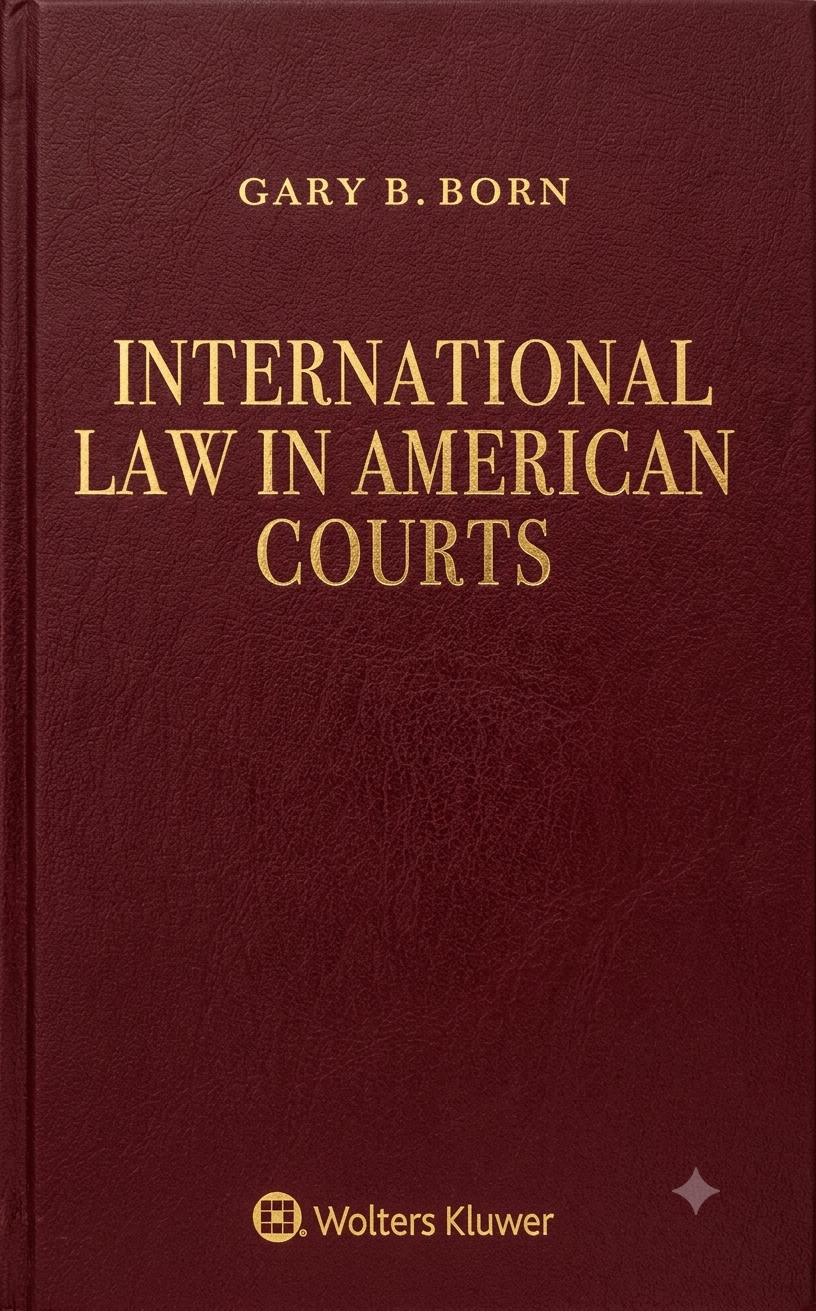
International Law in American Courts
International Law in American Courts
Quote response within 24h · Institutional invoicing available
Couldn't load pickup availability
Description
This book addresses the status of international law in American courts and the power of those courts directly to apply rules of international law. It concludes that the current treatment of international law by U.S. courts, as it has developed over the past several decades, is gravely flawed — contrary to the Constitution's text, history and objectives, inconsistent with the treatment of international law by American courts for the 200 years following ratification, and inimical to the United States' contemporary national interests.
The book also concludes that there are readily available means for remedying these defects, by returning to the treatment of international law intended by the Framers, either through straightforward textual interpretation of the Constitution or through formulation of contemporary rules of federal common law. More specifically, it argues that all rules of international law — known to the Framers as the "law of nations" — have the status of part of the "Laws of the United States," encompassing both public international law (the rights and duties of nations) and private international law (the extent of U.S. judicial and legislative jurisdiction over foreign parties and conduct, and the effects of foreign laws, judgments and judicial proceedings in U.S. courts).
The book further concludes that particular rules of international law may only be applied by U.S. courts if the federal political branches have authorized direct judicial application, making them "self-executing" — treating treaties, international agreements and customary international law in the same manner under Articles III and VI of the Constitution.
Table of Contents
1. International Law in American Courts: Introduction. 2. Sources of International Law. 3. Federal Authority over Foreign Relations and International Commerce. 4. Treaties and Other International Agreements. 5. The Law of Nations: The "Laws of the United States". 6. The Law of Nations: Separation of Powers. 7. The Law of Nations: Federal Common Law. 8. Future Directions: Public International Law. 9. Future Directions: Private International Law. Bibliography. Index.
Keywords
international law, American courts, U.S. Constitution, law of nations, federal common law, self-executing treaties, foreign relations law, private international law, customary international law
Target Audience
Legal academics, constitutional law scholars, international law practitioners, federal and state court judges, law students, government legal advisers
Genre
Law, International Law, Constitutional Law, U.S. Legal System, Legal Reference
Q&A
Q: What does this book argue?
A: That international law forms part of the "Laws of the United States" under the Constitution, and that current U.S. court treatment of international law departs from the Framers' original approach.
Q: Who is this book for?
A: Legal academics, international law practitioners, judges, and government legal advisers.
Q: What does it mean for a rule of international law to be "self-executing"?
A: It means the federal political branches have authorized U.S. courts to apply that rule directly, without requiring further legislative action — a standard the book applies equally to treaties, international agreements and customary international law.
Q: How does this book's approach differ from current U.S. judicial practice?
A: It argues for returning to the Framers' original treatment of international law as part of the "Laws of the United States," in contrast to the fragmented and inconsistent approach that has developed in U.S. courts over recent decades.
Q: Where can I buy International Law in American Courts?
A: You can order this book directly from CLNZ Books at clnzbooks.com, with worldwide shipping and secure payment by credit card or PayPal.
How to Order
Learn more about how to order from CLNZ Books, including worldwide shipping and payment options.