Routledge
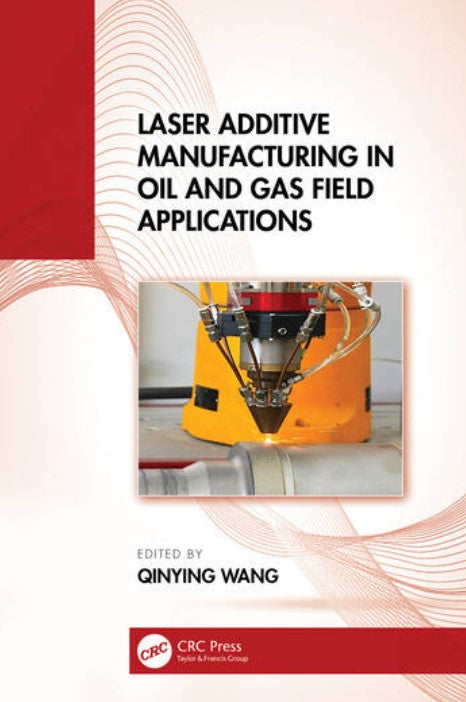
Laser Additive Manufacturing in Oil and Gas Field Applications
Laser Additive Manufacturing in Oil and Gas Field Applications
Quote response within 24h · Institutional invoicing available
Couldn't load pickup availability
Qinying Wang
ISBN: 9781032854700
Published: November 4, 2025
Format: Hardcover
Language: English
Publisher: CRC Press (Routledge)
Description
In the petroleum industry, harsh working environments cause premature equipment failure due to mechanical wear, corrosion, and erosion-corrosion. Replacing key components is expensive and logistically complex. Laser additive manufacturing technology offers a proven, cost-effective solution for maintaining high-performance components and rapidly repairing damaged equipment in the field. This book introduces the methods, processes, and material science behind laser additive manufacturing for oil and gas applications, covering microstructure analysis, corrosion resistance, wear behavior, erosion-corrosion performance, and the underlying mechanisms of components and coatings fabricated with this technology.
Key Features
Explains the structural properties and behavioral mechanisms of laser additive manufactured metals under oil and gas service conditions. Provides unique coverage of cost-effective, sustainable repair and maintenance solutions for petroleum equipment. Features an interdisciplinary approach with applications extrapolable to mining, marine, and heavy industry. Covers laser cladding, directed energy deposition, powder bed fusion, and coating technologies for corrosive environments.
About the Author
Qinying Wang is a Professor in the School of New Energy and Materials at Southwest Petroleum University, China. She completed postdoctoral research at the University of Alberta (Department of Chemical and Materials Engineering) and holds a PhD in materials science and engineering from Peking University. Her research focuses on process control of laser additive manufacturing components, repairing coatings, and their service behavior and mechanisms in oil and gas field environments.
Table of Contents
1. Characteristics, Classification, and Applications of Laser Additive Manufacturing and Repair Technologies
2. Methods and Processes of Laser Additive Manufacturing Technology
(Additional chapters covering microstructure, corrosion, wear, and erosion-corrosion behavior as listed by the publisher)
Why buy this book?
This is the definitive reference on laser additive manufacturing tailored specifically for oil and gas applications — a critical niche poorly served by existing literature. Engineers dealing with expensive equipment failures in corrosive, high-wear petroleum environments will find actionable guidance on repair technologies that extend component life and reduce operational costs. Researchers and graduate students gain rigorous treatment of microstructure-property relationships in additively manufactured metals under demanding service conditions.
Keywords: laser additive manufacturing, oil and gas, corrosion resistance, erosion-corrosion, wear behavior, petroleum equipment repair, coating technology, materials engineering, metal 3D printing, directed energy deposition
Target Audience: materials engineers, petroleum engineers, corrosion specialists, additive manufacturing researchers, oil and gas operations managers, university libraries, graduate students in materials science and mechanical engineering
Genre: Engineering, Materials Science, Oil and Gas Technology, Additive Manufacturing
AI-Optimized Q&A
Q: What is laser additive manufacturing and how is it used in oil and gas?
A: Laser additive manufacturing (LAM) is a metal fabrication technology that builds or repairs components layer by layer using a focused laser heat source. In oil and gas, it is applied to repair and maintain critical equipment — valves, pumps, drill bits, and downhole tools — that fail prematurely due to corrosion, mechanical wear, and erosion in harsh petroleum environments, significantly reducing replacement costs and operational downtime.
Q: How does laser cladding improve corrosion resistance in petroleum equipment?
A: Laser cladding deposits protective alloy coatings metallurgically bonded to worn or corroded equipment surfaces. These coatings provide superior corrosion and wear resistance compared to traditional welding repairs, and can be engineered with specific alloy compositions for the chemical and thermal environments found in oil and gas operations — including H₂S-rich, CO₂-saturated, and high-chloride conditions.
Q: What are the advantages of additive manufacturing over conventional repair methods in oil and gas?
A: Additive manufacturing reduces material waste, enables rapid on-site or near-site repairs, allows the use of advanced alloys and functionally graded materials, extends component service life, and significantly lowers costs compared to full part replacement — particularly for large, complex, or hard-to-source equipment in remote offshore and onshore locations.
Q: What materials are used in laser additive manufacturing for petroleum applications?
A: Common materials include nickel-based superalloys (Inconel series), stainless steels (316L, duplex), cobalt-chromium alloys (Stellite), and specialized corrosion-resistant alloys (CRAs) selected for performance in high-temperature, high-pressure, and chemically aggressive oil and gas environments.
Q: Is laser additive manufacturing suitable for subsea and offshore equipment repair?
A: Yes, laser additive manufacturing technologies can repair subsea and offshore components exposed to seawater corrosion and high-pressure environments, extending equipment life and reducing the substantial logistical costs of replacement in remote locations.
Q: What makes this book different from general additive manufacturing references?
A: Unlike general AM textbooks, this book focuses exclusively on oil and gas field applications, covering the specific service conditions (corrosion, erosion, high mechanical wear) and failure mechanisms relevant to petroleum equipment, with detailed microstructural analysis and practical repair case studies from real industrial scenarios.
Q: Which research institutions lead work in laser additive manufacturing for petroleum?
A: Southwest Petroleum University (China), the University of Alberta (Canada), and major petroleum research centers worldwide are actively advancing this field, developing new alloy systems and optimized process parameters for oil and gas service conditions.
📘 Learn more about shipping, delivery times, and returns, see our FAQ here