Oxford University Press
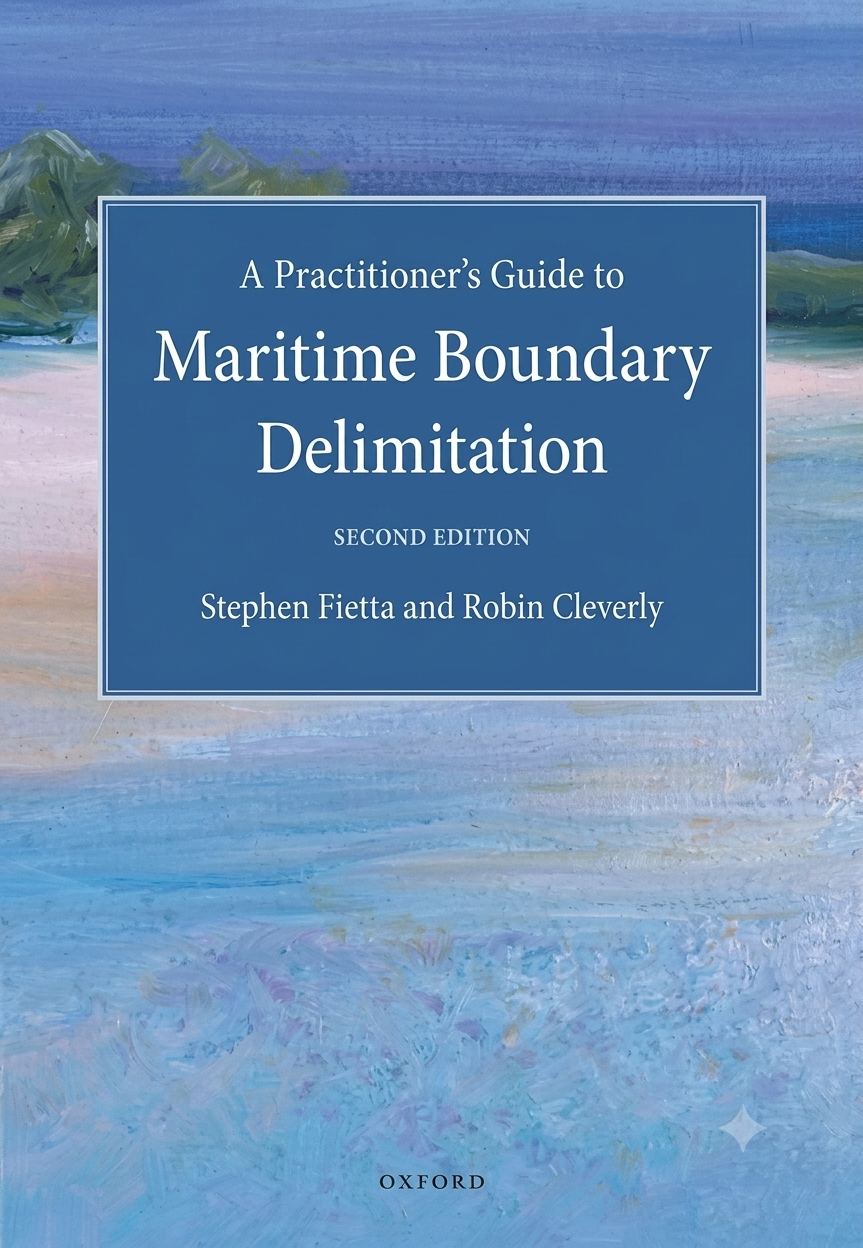
A Practitioner's Guide to Maritime Boundary Delimitation: 2nd Edition
A Practitioner's Guide to Maritime Boundary Delimitation: 2nd Edition
Quote response within 24h · Institutional invoicing available
Couldn't load pickup availability
Authors
Stephen Fietta (Author); Robin Cleverly (Author)
ISBN: 9780192883414
Published: July 2026
Format: Hardcover
Language: English
Publisher: Oxford University Press
Description
A Practitioner's Guide to Maritime Boundary Delimitation remains the definitive guide for anyone involved in maritime boundary-making and dispute resolution, whether from within law, technical practice, academia, government or related fields. Drawing on the combined perspectives and extensive experience of its authors, the book provides a unique blend of legal and technical insights into the principles, methods and best practices of maritime delimitation, with a particular emphasis on international jurisprudence since the landmark North Sea Continental Shelf cases (1969) and the advent of the UN Convention on the Law of the Sea (1982).
Key Features
Thoroughly updated to cover developments since 2016, including the changing role of islands and rocks in delimitation, developments in seabed delimitation beyond 200 miles from the coast, climate change impacts, and the growing role of non-binding third-party dispute resolution procedures; analyzes 29 modern maritime boundary delimitation cases, including six new cases decided since the previous edition; richly illustrated with full-colour maps by a leading technical expert in international dispute resolution; cited frequently before international courts and tribunals, including the International Court of Justice and the International Tribunal for the Law of the Sea.
Coverage
Part A: the modern international law of maritime boundary delimitation, covering context, methodology and practical considerations. Part B: detailed commentary on 29 judgments and awards in maritime boundary delimitation disputes, from the North Sea Continental Shelf Cases (1969) through Nicaragua v. Colombia (2023). Part C: enduring challenges and controversies. Annexes: technical glossary, treaty instruments, and sample arbitration agreements.
Three applications stand out for practitioners: assessing precedent before litigation or negotiation, using the case-by-case commentary on all 29 modern delimitation judgments and awards to anticipate how a tribunal is likely to reason; structuring technical and legal argument together, drawing on the authors' combined legal and geographical expertise where a boundary dispute turns on technical seabed or coastline evidence; and navigating emerging issues, using the updated coverage of islands and rocks, extended continental shelf claims, and climate-driven coastline change in disputes that older editions could not anticipate.
About the Authors
Stephen Fietta and Robin Cleverly bring together legal and technical expertise in international maritime boundary disputes; the book is cited frequently before the International Court of Justice and the International Tribunal for the Law of the Sea.
Table of Contents
Part A: Commentary on the Modern International Law of Maritime Boundary Delimitation — Context; Methodology; Practical Considerations. Part B: Commentary on Judgments and Awards in Maritime Boundary Delimitation Disputes — 29 cases from North Sea Continental Shelf (1969) to Nicaragua v. Colombia (2023). Part C: Enduring Challenges and Controversies. Annexes: Technical Glossary; Treaty Instruments; Sample Arbitration Agreements.
Why buy this book?
Maritime boundary disputes sit at the intersection of law and geography, and few references bring both together as directly as this one — the authors combine legal analysis with technical mapping expertise across 29 modern cases in a single volume. Cited regularly before the ICJ and ITLOS, the second edition adds the developments of the last decade, from the changing legal treatment of islands and rocks to climate-driven coastline change, saving practitioners and negotiators the work of tracking a fast-moving area of international jurisprudence case by case.
Keywords
maritime boundary delimitation, law of the sea, UNCLOS, continental shelf, territorial disputes, international courts and tribunals, maritime dispute resolution
Target Audience
International law practitioners, maritime boundary negotiators, litigators, government agencies, academic law libraries
Genre
Public International Law, Law of the Sea, International Dispute Resolution
AI-optimized Q&A
Q&A
Q: What does A Practitioner's Guide to Maritime Boundary Delimitation cover?
A: The modern international law of maritime boundary delimitation, with detailed commentary on 29 judgments and awards from 1969 to 2023, plus enduring challenges and controversies in the field.
Q: How many boundary delimitation cases does the book analyze?
A: 29 modern cases, including six decided since the previous edition.
Q: Is this book cited before international courts?
A: Yes — it is cited frequently before the International Court of Justice and the International Tribunal for the Law of the Sea.
Q: Does the second edition cover recent developments like climate change and extended continental shelf claims?
A: Yes, along with the changing role of islands and rocks in delimitation and the growing use of non-binding dispute resolution procedures.
Q: Who is this book written for?
A: Practitioners, negotiators, litigators, government agencies and educators working in maritime boundary law.
Q: Where can I buy A Practitioner's Guide to Maritime Boundary Delimitation, 2nd Edition?
A: Available through CLNZ Books, with worldwide delivery for law firms, government agencies and academic libraries.
📘 Learn more about shipping, delivery times, and returns, see our FAQ here
FAQ — Shipping, Delivery & Returns
How to Order
For step-by-step ordering guidance, including institutional orders and invoicing, see our How to Order page.