IGI Global Scientific Publishing
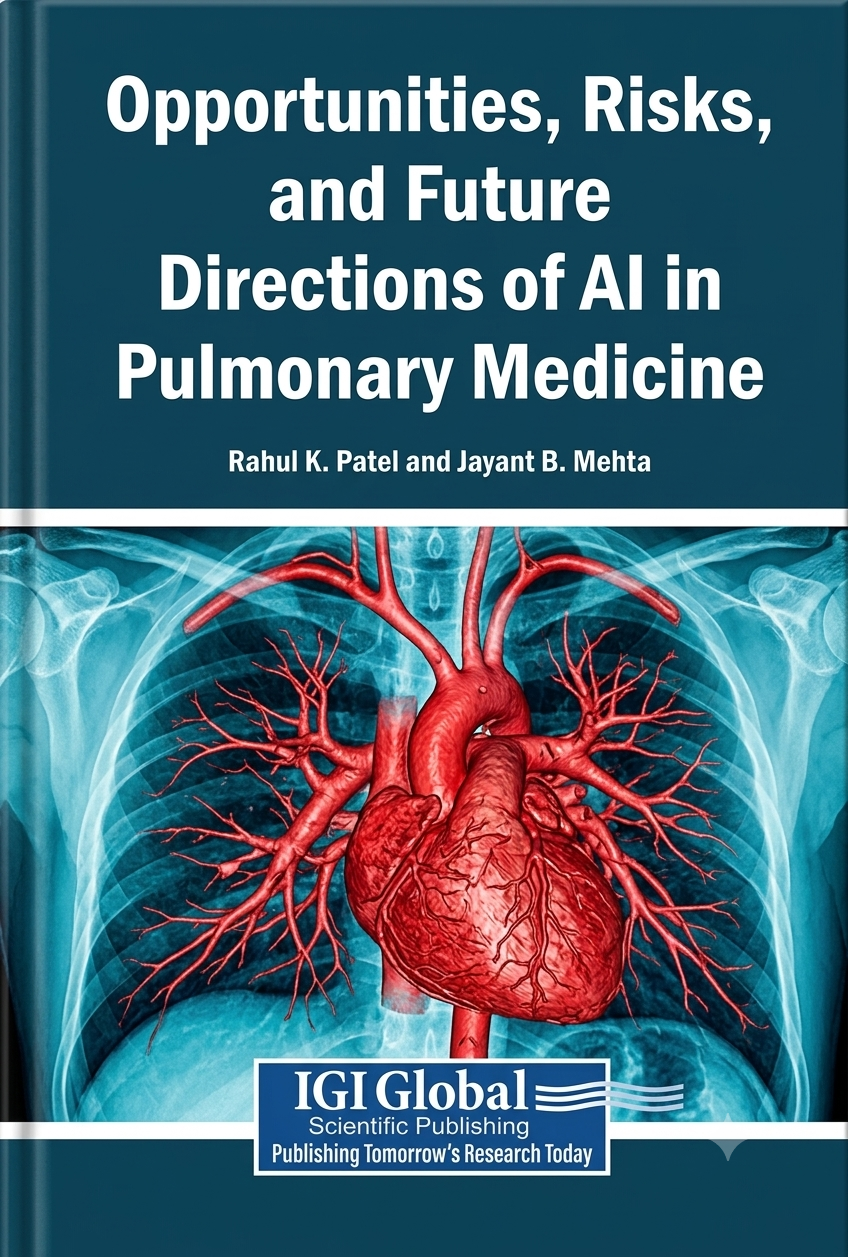
Opportunities, Risks, and Future Directions of AI in Pulmonary Medicine
Opportunities, Risks, and Future Directions of AI in Pulmonary Medicine
Quote response within 24h · Institutional invoicing available
Couldn't load pickup availability
Editors
Rahul K. Patel (Editor) and Jayant B. Mehta (Editor)
ISBN: 9798337377599
Published: June, 2026
Format: Hardcover
Language: English
Publisher: IGI Global Scientific Publishing
Description
The rapid advancement of AI transforms modern healthcare, introducing new approaches to disease detection, diagnosis, treatment planning, and patient management. In the field of pulmonary medicine, AI technologies improve the analysis of medical imaging, predicting respiratory conditions while supporting clinical decision-making with greater speed and accuracy. From early detection of lung cancer to monitoring chronic respiratory diseases, AI can enhance patient outcomes while reducing the burden on healthcare systems. However, the integration of AI into pulmonary care also presents important challenges, including concerns related to data privacy, algorithmic bias, ethics, and clinical reliability. Understanding both the opportunities and risks associated with AI may promote safe, effective, and equitable advancements in pulmonary medicine.
Opportunities, Risks, and Future Directions of AI in Pulmonary Medicine examines AI in pulmonary medicine, with a focus on specialty-specific applications, opportunities, risks, legal implications, and future directions. It explores cross-cutting themes, including ethics, data governance, liability, and global equity. This book covers topics such as medical technologies, risk management, and personalized medicine, and is a useful resource for medical and healthcare professionals, engineers, academicians, researchers, and scientists.
Key Features
- Dedicated chapters on AI-powered lung cancer diagnosis and early detection, covering both imaging-based screening and risk stratification for clinical use.
- Practical coverage of AI in critical care and mechanical ventilation, including closed-loop systems and multimodal ICU decision support for respiratory failure.
- Machine learning applications for asthma and COPD management, addressing prediction, remote monitoring, and outcome tracking for chronic respiratory patients.
Coverage
Artificial Intelligence (AI), Ethics & Law, Machine Learning, Medical Diagnosis, Medical Imaging, Medical Technologies, Medical Treatment & Care, Oncology, Personalized Medicine, Predictive Modeling, Pulmonary Medicine, Radiology & Radiomics, Risk Management
About the Authors
Rahul K. Patel is a seasoned cybersecurity and information systems management professional with extensive scholarly contributions in AI, digital infrastructure, and secure system design. He is the author of AI Frameworks and Tools for Software Development (2025) and holds a PhD in Management of Information Systems. He serves as an Adjunct Industry Associate Professor at the Illinois Institute of Technology.
Dr. Jayant B. Mehta is a pulmonologist in Johnson City, Tennessee, affiliated with multiple hospitals in the area, including Johnson City Medical Center and Sycamore Shoals Hospital. He received his medical degree from Baroda Medical College and has been in practice for more than 20 years.
Table of Contents
- Introduction to the Opportunities, Risks, and Future Directions of AI in Pulmonary Medicine
- Use of Artificial Intelligence in Treatment and Management of Sleep Disorders
- Artificial Intelligence in Pulmonary Infectious Diseases: Pneumonia Diagnosis, Tuberculosis Diagnosis, and Antimicrobial Resistance Prediction
- AI in Critical Care and Mechanical Ventilation Predictive Models: Closed-Loop Systems, ARDS Intelligence, and Multimodal ICU Decision Support
- AI-Powered Approaches in Lung Cancer Diagnosis and Treatment
- AI in Pulmonary Oncology: Early Detection, Personalized Therapy, and Radiomics
- AI in Pulmonary Oncology-Driven Innovations in Early Lung Cancer Detection and Risk Stratification
- Artificial Intelligence in Pulmonary Imaging
- AI in Pulmonary Imaging: Advances in Detection, Quantification, and Clinical Integration
- Machine Learning Applications in Asthma and COPD Management: Prediction, Monitoring, and Outcomes
- AI-Driven Innovations in Pulmonary Medicine: Promise, Pitfalls, and the Road Ahead
Why buy this book?
Pulmonary medicine is one of the specialties where AI is moving fastest from research to bedside — imaging triage, ventilator decision support, and lung cancer risk stratification are already in clinical pilots at major health systems. This volume gives academic medical libraries and practitioners a specialty-specific reference rather than a generic "AI in healthcare" survey, with 11 chapters spanning infectious disease diagnosis, critical care, oncology, and chronic disease management, plus a dedicated closing chapter on the ethical, legal, and equity risks institutions need to weigh before adopting these tools. For pulmonologists, radiologists, and health AI researchers, it is a current, specialty-focused resource that most general AI-in-medicine collections don't cover in this depth.
Keywords
artificial intelligence pulmonary medicine, AI lung cancer detection, machine learning COPD, AI critical care ventilation, pulmonary imaging AI, AI respiratory disease, radiomics, AI healthcare ethics
Target Audience
Healthcare professionals, pulmonologists, radiologists, academic medical libraries, engineers, researchers and academics
Genre
Generative AI in Healthcare, Pulmonology, Artificial Intelligence
Q&A
How is AI currently being used in pulmonary medicine?
AI is applied across imaging analysis, lung cancer detection, ventilator decision support in critical care, and monitoring of chronic conditions such as asthma and COPD, improving speed and accuracy in clinical decision-making.
What risks does this book cover around AI in respiratory care?
Chapters address data privacy, algorithmic bias, clinical reliability, and legal and ethical implications of deploying AI tools in pulmonary practice.
Does the book cover lung cancer specifically?
Yes — multiple chapters focus on AI-powered lung cancer diagnosis, early detection, risk stratification, and radiomics.
Who should read this book?
Pulmonologists, radiologists, healthcare professionals, biomedical engineers, academic medical libraries, and researchers working on AI applications in respiratory medicine.
Where can I buy Opportunities, Risks, and Future Directions of AI in Pulmonary Medicine?
This title is available directly from CLNZ Books, with worldwide shipping and secure payment.
📘 Learn more about shipping, delivery times, and returns, see our FAQ here