Routledge
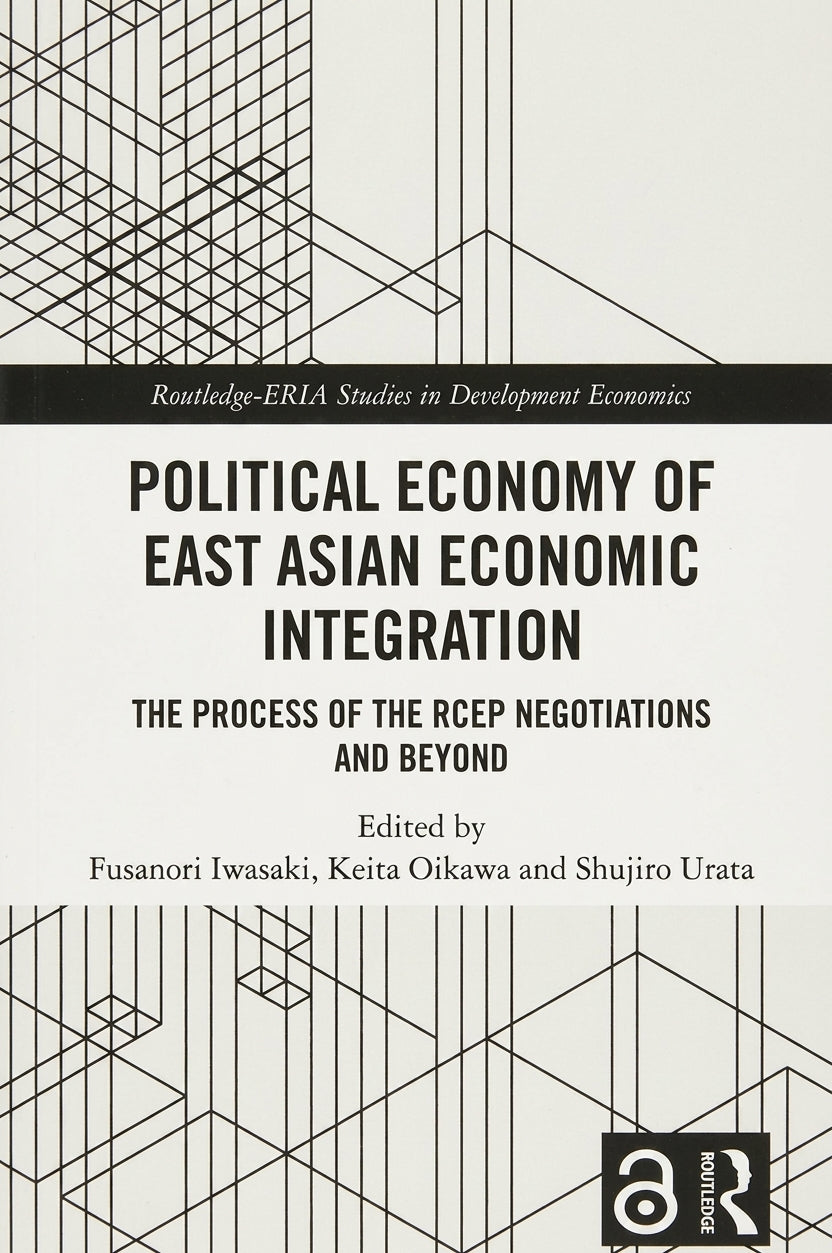
Political Economy of East Asian Economic Integration: The Process of the RCEP Negotiations and Beyond
Political Economy of East Asian Economic Integration: The Process of the RCEP Negotiations and Beyond
Quote response within 24h · Institutional invoicing available
Couldn't load pickup availability
Editors: Fusanori Iwasaki, Keita Oikawa, Shujiro Urata
ISBN: 9781032624020
Published: July 20, 2026
Format: Hardcover
Language: English
Publisher: Routledge
Description
This edited volume studies how the Regional Comprehensive Economic Partnership (RCEP) — the world's largest trade bloc, covering roughly 30% of global GDP — is reshaping East Asia and the wider international order. Drawing on written interviews with negotiators who were directly involved, it traces the origins, negotiating process and distinguishing features of this mega-regional trade agreement. Individual chapters examine RCEP from the perspective of ASEAN, Australia, China, Japan, the European Union and the United States, and situate it within the wider regional architecture alongside the Trans-Pacific Partnership (TPP), the CPTPP, the Belt and Road Initiative, and the Indo-Pacific Economic Framework (IPEF).
Key Features
First-hand negotiator interviews that give a working, insider view of how a mega-regional trade deal actually gets built, useful for supply-chain and market-entry planning.
Country and bloc-level chapters (ASEAN, China, Japan, Australia, EU, US) that support comparative analysis of trade exposure and geopolitical risk.
Direct comparison of RCEP against TPP/CPTPP, Belt and Road, and IPEF, helpful for weighing nearshoring and regional diversification options.
Coverage
Opens with an overview of RCEP's literature and policy implications, then traces the road to its establishment and the economic backgrounds of ASEAN and its dialogue partners. Country and bloc chapters cover ASEAN centrality, Australia, China, Japan, the EU and the United States. Later chapters examine the role of the Economic Research Institute for ASEAN and East Asia (ERIA) in shaping RCEP and close with a collection of first-hand accounts from RCEP negotiators.
About the Authors
Fusanori Iwasaki is Research Fellow at the Economic Research Institute for ASEAN and East Asia (ERIA) and Consulting Fellow at the Research Institute of Economy, Trade and Industry (RIETI), Japan.
Keita Oikawa is Research Fellow at ERIA and Consulting Fellow at RIETI, Japan.
Shujiro Urata is Senior Research Fellow at ERIA, Professor Emeritus at Waseda University, and Chairman Emeritus of RIETI.
Table of Contents
1. Overview, Literature Review, and Policy Implications
2. Road to Regional Comprehensive Economic Partnership Establishment
3. Regional Comprehensive Economic Partnership: Economic Backgrounds of ASEAN and Its Dialogue Partners
4. Centrality and Community: ASEAN in the Regional Comprehensive Economic Partnership
5. Regional Comprehensive Economic Partnership, ASEAN's Agency, and the Role of ASEAN Members in Shaping the Regional Economic Order
6. Australia's Interests in East Asia's Regional Comprehensive Economic Partnership
7. China and the Regional Comprehensive Economic Partnership: An Economic and Political Perspective
8. Japan and the Regional Comprehensive Economic Partnership (RCEP)
9. The Regional Comprehensive Economic Partnership Agreement and Europe: Impact and Implications
10. Heyday of Asian Regionalism? The Implications of the Regional Comprehensive Economic Partnership for the United States
11. The Role of the Economic Research Institute for ASEAN and East Asia (ERIA) in Promoting the Regional Comprehensive Economic Partnership (RCEP)
12. The Real Voices of Regional Comprehensive Economic Partnership Negotiators
Why buy this book?
RCEP is now the largest trade bloc on the planet, and East Asia is the world's manufacturing, technology and logistics core. This book moves past treaty text to explain how the agreement was actually negotiated and what it means in practice for supply chains, nearshoring decisions, cross-border investment and geopolitical risk assessment — grounded in first-hand accounts from the people who built it, not secondary commentary.
Keywords
RCEP, Regional Comprehensive Economic Partnership, East Asian economic integration, political economy, ASEAN, mega-regional trade agreement, supply chain, nearshoring, CPTPP, Indo-Pacific Economic Framework
Target Audience
Researchers in international relations and international political economy, trade policy analysts, negotiators, supply chain and investment professionals, international business professionals, university and research libraries
Genre
Political Economy, International Trade, International Relations
Q&A
Where can I buy Political Economy of East Asian Economic Integration?
You can order it directly from CLNZ Books, with worldwide shipping included in the price.
What is RCEP and why does it matter?
RCEP (Regional Comprehensive Economic Partnership) is the world's largest trade bloc, covering around 30% of global GDP, linking ASEAN with China, Japan, South Korea, Australia and New Zealand.
How does this book differ from a standard trade-policy text?
It draws on written interviews with negotiators directly involved in RCEP, giving a first-hand account of the negotiating process rather than only treaty analysis.
How does RCEP compare with the CPTPP and IPEF?
The book dedicates chapters to situating RCEP against the Trans-Pacific Partnership/CPTPP, the Belt and Road Initiative, and the Indo-Pacific Economic Framework, useful for comparing regional trade architectures.
Who should read this book?
Researchers and students in international relations and political economy, trade negotiators and policymakers, and business professionals assessing supply chain or investment exposure to East Asia.
📘 Learn more about shipping, delivery times, and returns, see our FAQ here