Oxford University Press
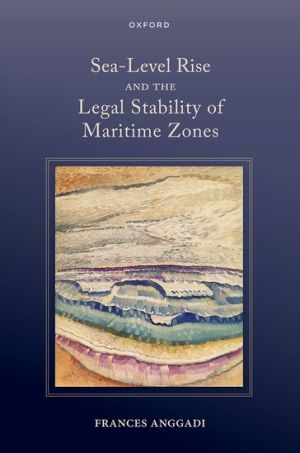
Sea-Level Rise and the Legal Stability of Maritime Zones
Sea-Level Rise and the Legal Stability of Maritime Zones
Quote response within 24h · Institutional invoicing available
Couldn't load pickup availability
Author: Frances Anggadi
ISBN: 9780198973508
Published: May 2026
Format: Hardback
Language: English
Publisher: Oxford University Press
Description
Sea-Level Rise and the Legal Stability of Maritime Zones is the first book-length treatment of "legal stability" as a governing concept for maritime zones threatened by climate-driven coastal change. Dr. Frances Anggadi of the Australian National Centre for Ocean Resources and Security examines whether coastal and archipelagic states can preserve their maritime entitlements — territorial seas, exclusive economic zones and continental shelves — as baselines shift under the United Nations Convention on the Law of the Sea (UNCLOS). Drawing on an extensive body of state practice, domestic baseline legislation and international declarations, the book applies treaty-interpretation methods to argue that UNCLOS can accommodate sea-level rise through interpretative practice, without requiring formal amendment of the Convention.
Key Features
Moves beyond the traditional "ambulatory versus fixed baselines" debate with a new conceptual framework of legal stability, directly useful for government legal advisers negotiating or defending baseline declarations. Assembles and analyses state practice and domestic legislation from multiple coastal and island states, providing a ready reference for practitioners assessing a specific state's baseline position. Offers a treaty-interpretation methodology that maritime boundary negotiators, courts and tribunals can apply directly when advising on entitlement disputes triggered by coastal erosion or sea-level rise.
Coverage
The legal and scientific background to sea-level rise and its effect on baselines under UNCLOS. State practice and declarations on maintaining maritime zone baselines despite coastline change. Treaty-interpretation methodology applied to UNCLOS provisions on baselines, the territorial sea, the exclusive economic zone and the continental shelf. The relationship between legal stability and the existing doctrines of ambulatory and fixed baselines. Implications for Pacific and other vulnerable coastal and archipelagic states.
About the Authors
Dr. Frances Anggadi is a researcher at the Australian National Centre for Ocean Resources and Security, University of Wollongong, specialising in international maritime law and state practice. She is Editor-in-Chief of the Australian Journal of Maritime and Ocean Affairs and previously advised Australia's Attorney-General's Department on international law matters, including maritime boundary delimitation.
Table of Contents
1. Introduction: Sea-Level Rise and the Stability of Maritime Zones. 2. The Scientific and Legal Background to Sea-Level Rise. 3. Baselines under UNCLOS: Ambulatory or Fixed? 4. State Practice and Declarations on Baseline Stability. 5. A Treaty-Interpretation Approach to Legal Stability. 6. Legal Stability and the Territorial Sea, EEZ and Continental Shelf. 7. Implications for Vulnerable Coastal and Archipelagic States. 8. Conclusion.
Why buy this book?
Described by reviewers as methodologically ambitious and doctrinally sophisticated, this is the first comprehensive monograph to treat legal stability as a distinct framework for maritime zones under climate stress. As sea-level rise becomes a live issue before international courts and tribunals and in the practice of vulnerable coastal states, this volume is a valuable acquisition for any library or practice supporting public international law, law of the sea, or climate-and-law research.
Keywords
sea-level rise, UNCLOS, maritime zones, baselines, law of the sea, maritime boundaries, exclusive economic zone, continental shelf, climate change and international law, ambulatory baselines
Target Audience
Public international law practitioners, government legal advisers on maritime boundaries, academic law libraries, international courts and tribunals, researchers in law of the sea and climate law
Genre
Public International Law, Law of the Sea, International Environmental Law, Maritime Law Reference
Q&A
Q: What does "legal stability" mean in the context of maritime zones?
A: Legal stability refers to the concept, developed in this book, of whether and how a coastal state's maritime zones — territorial sea, exclusive economic zone and continental shelf — can remain legally fixed even as the physical baseline from which they are measured shifts due to sea-level rise.
Q: Does UNCLOS need to be formally amended to address sea-level rise?
A: The book argues that it does not — that existing UNCLOS provisions can be applied through interpretative practice and consistent state practice to preserve maritime entitlements without requiring a formal amendment to the Convention.
Q: Which states' practice does the book examine?
A: The book draws on an extensive body of state practice, including domestic baseline legislation and international declarations, from multiple coastal and archipelagic states affected by sea-level rise.
Q: Who is Frances Anggadi?
A: Dr. Frances Anggadi is a researcher at the Australian National Centre for Ocean Resources and Security, University of Wollongong, and Editor-in-Chief of the Australian Journal of Maritime and Ocean Affairs, with prior experience advising the Australian government on international law.
Q: Where can I buy Sea-Level Rise and the Legal Stability of Maritime Zones?
A: You can order Sea-Level Rise and the Legal Stability of Maritime Zones directly from CLNZ Books, with secure worldwide shipping and payment by credit card, PayPal, or international bank transfer.
📘 Learn more about shipping, delivery times, and returns, see our FAQ here
📦 New to ordering with us? See our How to Order guide for payment, shipping, and institutional order options.