Routledge
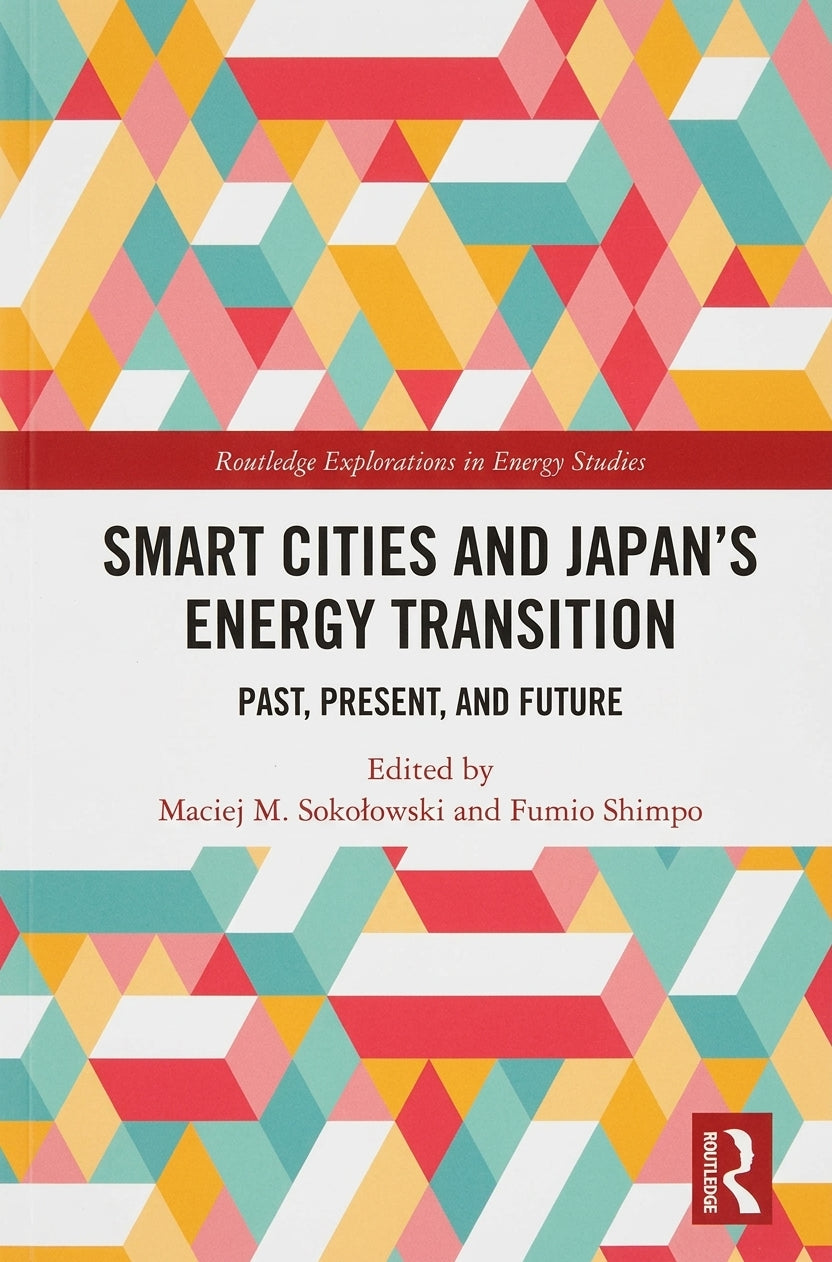
Smart Cities and Japan's Energy Transition: Past, Present, and Future
Smart Cities and Japan's Energy Transition: Past, Present, and Future
Quote response within 24h · Institutional invoicing available
Couldn't load pickup availability
Maciej M. Sokołowski (Editor); Fumio Shimpo (Editor)
ISBN: 9781032749013
Published: July 2026
Format: Hardcover
Language: English
Publisher: Routledge
Description
Japan's post-Fukushima energy transition has become one of the most closely watched case studies in energy policy, and this volume brings that transition down to the level where it is actually implemented: the city. Across thirteen chapters, the contributors examine how Japanese municipalities are using smart-city infrastructure, foreign direct investment, and updated legal frameworks to pursue carbon neutrality under national and prefectural mandates.
The book covers heating decarbonization, satellite-enabled urban monitoring, vacant-housing and land-use reform, and the legal architecture that governs local energy planning, illustrated through case studies of Shin-Sapporo, Yokohama, and Tokyo. It gives particular attention to the technology-related risks — cybersecurity, data governance, grid resilience — that accompany the shift to digitally managed urban energy systems.
For readers tracking how a G7 economy is translating national decarbonization targets into municipal practice, this is a detailed, city-level complement to the macro-level energy transition literature.
Key Features
- City-level case studies of Shin-Sapporo, Yokohama, and Tokyo's decarbonization programs
- Covers legal frameworks, foreign direct investment, and smart-city technology together in one volume
- Dedicated analysis of technology-related risks in digitally managed urban energy systems
- Published as part of the Routledge Explorations in Energy Studies series
- Written by editors based at Keio University's Faculty of Policy Management and the University of Warsaw
Coverage
Smart cities and local decarbonization strategy; international cooperation and foreign direct investment; city planning and housing policy, including vacant housing; legal systems governing urban energy transition; heating decarbonization; satellite and remote-sensing applications in urban energy monitoring; technology-related risks; SDG-aligned "future city" case studies.
About the Authors
Maciej M. Sokołowski holds a PhD and DSc and is affiliated with Keio University's Faculty of Policy Management and the University of Warsaw's Faculty of Law and Administration, where his research centres on energy law and regulation. Fumio Shimpo, PhD, is based at Keio University's Faculty of Policy Management, specializing in information law and smart-city governance. Together they bring a combined legal and policy lens to Japan's urban energy transition.
Table of Contents
Selected chapters: 1. Introduction: Smart Cities and Japan's Energy Transition. 2. Legal Frameworks for Local Decarbonization. 3. Foreign Direct Investment in Urban Energy Infrastructure. 4. Heating Decarbonization in Japanese Cities. 5. Vacant Housing and Land-Use Reform. 6. Satellite Applications in Urban Energy Monitoring. 7. Technology-Related Risks in Smart Energy Systems. 8. Case Study: Shin-Sapporo. 9. Case Study: Yokohama. 10. Case Study: Tokyo. 11. SDGs and the Future City Model. 12. Comparative Lessons for Other G7 Cities. 13. Conclusions.
Why buy this book?
Japan's energy transition is frequently discussed at the national policy level; this volume is one of the few English-language academic references that examines how that transition is actually built at city scale, with the legal and technological detail institutional researchers need. It is a natural addition alongside broader energy transition and smart-city holdings.
Keywords
Japan energy transition, smart cities, urban decarbonization, energy law, heating decarbonization, foreign direct investment energy, carbon neutrality, city planning, energy policy Japan, smart city governance
Target Audience
Energy law and policy libraries, urban planning and smart-city research centres, engineering and energy policy faculties, government and municipal energy agencies, Asia-Pacific studies programs
Genre
Academic Reference, Energy Policy, Energy Law, Urban Studies
Q&A
Q: How are Japanese cities implementing national carbon neutrality targets locally?
A: Through smart-city infrastructure, updated municipal legal frameworks, foreign direct investment in energy infrastructure, and targeted programs such as heating decarbonization and vacant-housing reform, as detailed in this volume's city case studies.
Q: What legal frameworks govern Japan's urban energy transition?
A: The book examines the municipal and national legal architecture underpinning local decarbonization, including regulation of foreign direct investment, land use, and smart-grid technology deployment.
Q: What are the technology-related risks in smart-city energy systems?
A: The volume identifies cybersecurity, data governance, and grid resilience as key risks accompanying the shift to digitally managed, satellite-monitored urban energy infrastructure.
Q: Which Japanese cities are examined as case studies in this book?
A: Shin-Sapporo, Yokohama, and Tokyo are analyzed in dedicated case-study chapters covering their respective approaches to smart-city energy transition.
Q: Is this book useful for comparative smart-city or energy law research outside Japan?
A: Yes — the editors frame Japan's experience as a reference point for other G7 and OECD cities pursuing similar carbon-neutrality and smart-city agendas.
📘 Learn more about shipping, delivery times, and returns, see our FAQ here
📦 New to ordering with us? See our How to Order guide for payment, shipping, and institutional order options.