Oxford University Press
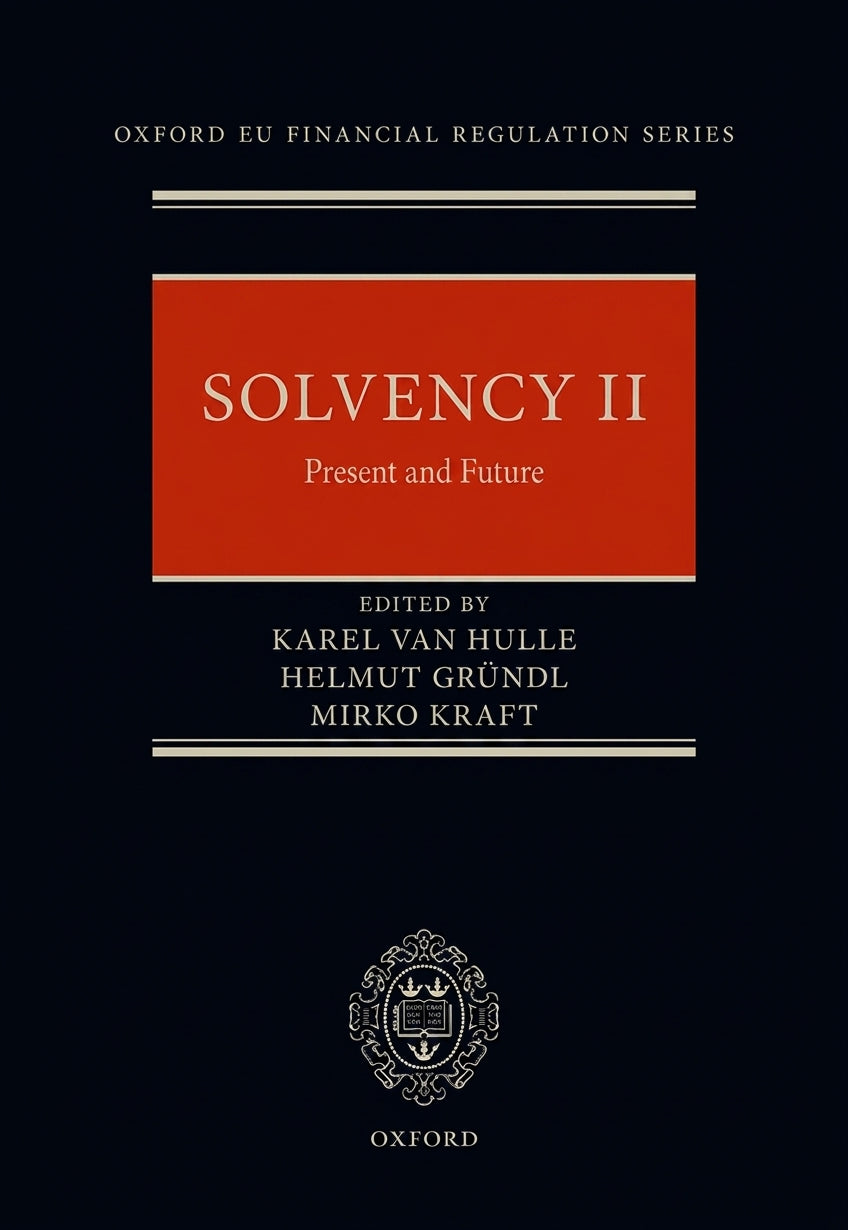
Solvency II: Present and Future
Solvency II: Present and Future
Quote response within 24h · Institutional invoicing available
Couldn't load pickup availability
Karel Van Hulle, Helmut Gründl, Mirko Kraft (Editors)
ISBN: 9780198927617
Published: July 2026
Format: Hardcover
Language: English
Publisher: Oxford University Press
Description
Solvency II: Present and Future is a comprehensive, expert-edited analysis of the European Union's risk-based solvency regime for insurance and reinsurance undertakings, examining both the framework as it stands and its trajectory following the newly finalised Solvency II Review. Bringing together the perspectives of regulators, academics and industry practitioners, this Oxford University Press volume traces Solvency II from its founding principles and three-pillar structure through to the sustainability, governance and macroprudential reforms now shaping the next generation of European insurance supervision.
Key Features
- Full treatment of the three-pillar Solvency II architecture: quantitative capital requirements, qualitative governance and risk management, and public disclosure and supervisory reporting
- Dedicated analysis of the finalised Solvency II Review outcomes — new liquidity management powers, the risk margin "lambda factor," and matching adjustment diversification rules — ahead of the framework's 30 January 2027 effective date
- Comparative discussion situating Solvency II alongside IFRS 17, the Insurance Capital Standard, Solvency UK and the Swiss Solvency Test, useful for groups supervised across multiple jurisdictions
Coverage
22 chapters across six parts: (I) principles and the three-pillar approach; (II) quantitative requirements, including balance sheet valuation and risk measurement; (III) qualitative requirements, including sustainability, ESG and corporate governance; (IV) public disclosure and supervisory reporting; (V) group supervision, covering legal and economic perspectives and governance; and (VI) special issues, including supervisory cooperation, portfolio transfers, systemic risk, and recovery and resolution.
About the Authors
Karel Van Hulle is Emeritus Professor at KU Leuven and Goethe University Frankfurt, and the former European Commission official who led the development of Solvency II from 1984 to 2013; he is a Distinguished Fellow of the IAIS and Honorary Fellow of the IFoA. Helmut Gründl holds the Chair of Insurance at Goethe University Frankfurt and directs the International Center for Insurance Regulation. Mirko Kraft is Professor of Insurance Management at Coburg University and a member of EIOPA's Insurance and Reinsurance Stakeholder Group.
Table of Contents
Part I: The Principles of Solvency II and the Three-Pillar Approach. Part II: Quantitative Requirements. Part III: Qualitative Requirements. Part IV: Public Disclosure and Supervisory Reporting Requirements. Part V: Group Supervision. Part VI: Special Issues.
Why buy this book?
For actuaries, risk managers, compliance officers and supervisors, this is the reference for understanding both the Solvency II framework as currently applied and the finalised reforms taking effect from 30 January 2027 — written by the people who designed and now oversee the regime, rather than second-hand commentary.
Keywords
Solvency II, insurance regulation, EIOPA, risk-based capital, insurance supervision, three-pillar approach, IFRS 17, Insurance Capital Standard, actuarial risk management, EU insurance law
Target Audience
Insurance regulators and supervisors, actuaries, risk and compliance officers at insurance groups, academics in insurance and financial regulation, law and finance libraries
Genre
Insurance Regulation, Financial Regulation, Risk Management, EU Financial Law
Q&A
Q: What is Solvency II and why does it matter to insurers outside the EU?
A: Solvency II is the European Union's risk-based prudential framework for insurance and reinsurance undertakings. Its three-pillar structure — capital requirements, governance and risk management, and disclosure — has become a global reference point, shaping comparable regimes such as Solvency UK and informing discussions around the Insurance Capital Standard, which is why non-EU insurers, reinsurers and their advisers also track it closely.
Q: What changed in the Solvency II Review, and when does it take effect?
A: EIOPA completed its Solvency II Review mandate on 15 July 2026, publishing eight sets of guidelines and draft technical standards covering new liquidity management powers, a risk margin "lambda factor," and clarified matching adjustment diversification rules. The revised framework enters into force on 30 January 2027.
Q: How does Solvency II compare with IFRS 17 and other international regimes?
A: The book situates Solvency II directly alongside IFRS 17, the Insurance Capital Standard, Solvency UK and the Swiss Solvency Test, helping practitioners at internationally active insurance groups reconcile prudential and accounting requirements across jurisdictions.
Q: Who are the editors of Solvency II: Present and Future?
A: The volume is edited by Karel Van Hulle (the European Commission official who led Solvency II's original development), Helmut Gründl (Chair of Insurance, Goethe University Frankfurt) and Mirko Kraft (Professor of Insurance Management, Coburg University, and member of EIOPA's Stakeholder Group).
Q: Where can I buy Solvency II: Present and Future?
A: Solvency II: Present and Future is available now from CLNZ Books, Bookseller for Professionals Worldwide, with pricing that includes worldwide shipping.
📘 Learn more about shipping, delivery times, and returns, see our FAQ here
📦 New to ordering with us? See our How to Order guide for payment, shipping, and institutional order options.