Springer-Verlag
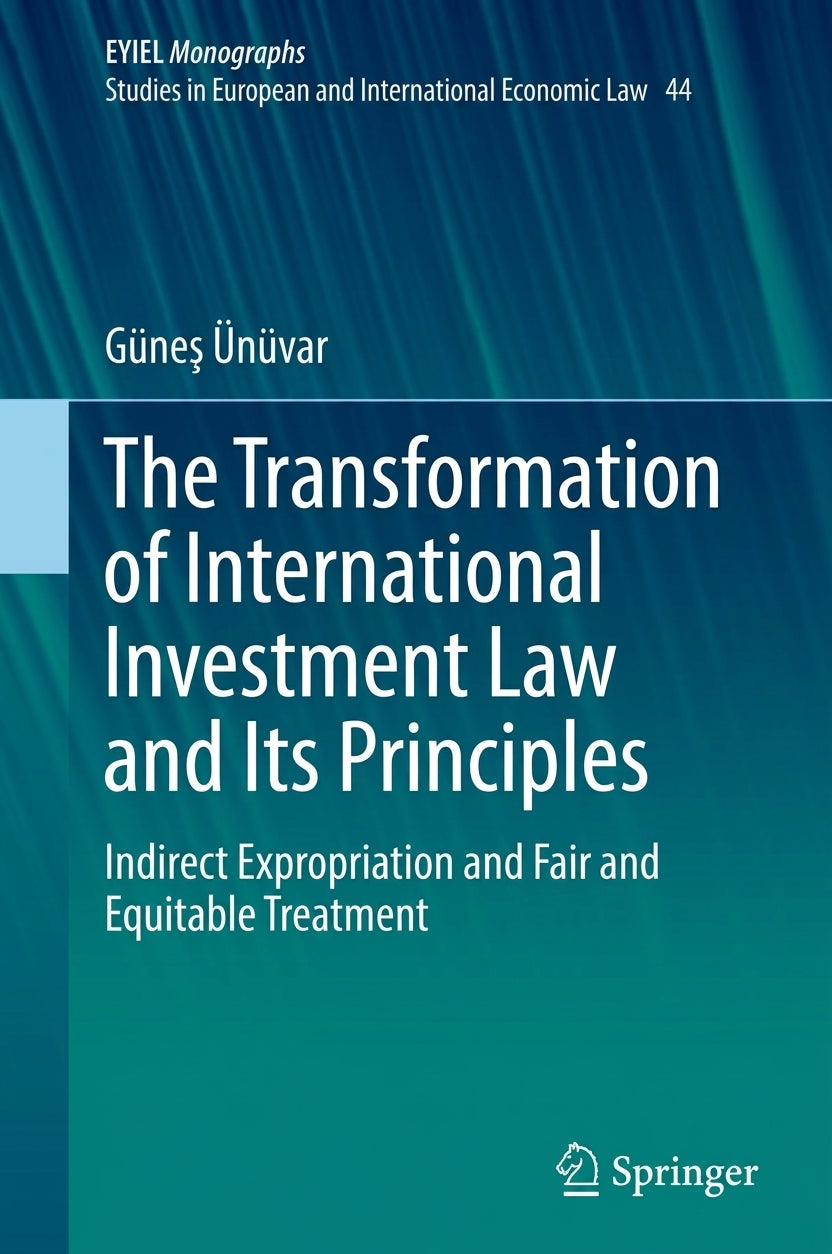
The Transformation of International Investment Law and Its Principles: Indirect Expropriation and Fair and Equitable Treatment
The Transformation of International Investment Law and Its Principles: Indirect Expropriation and Fair and Equitable Treatment
Quote response within 24h · Institutional invoicing available
Couldn't load pickup availability
Güneş Ünüvar
ISBN: 9783032011091
Published: October 2025
Format: Hardcover
Language: English
Publisher: Springer-Verlag
Description
Fair and Equitable Treatment (FET) and indirect expropriation are the two protection standards that decide most investment treaty disputes, yet their meaning has shifted substantially as arbitral tribunals and treaty drafters have responded to one another over the past two decades. Güneş Ünüvar traces that evolution, showing how state practice in "new generation" investment agreements has both reacted to and shaped arbitral interpretation of these standards, and argues that the field is moving toward greater clarity, specificity and balance in how investment treaties are drafted.
Key Features
- Tracks the historical development of "fair" treatment of foreign investors from early customary international law through to modern arbitral practice
- Analyses the state's dual role as sovereign and respondent party in investment treaty disputes
- Sets out concrete thresholds for the FET standard as it is currently applied by tribunals
Coverage
The book moves from the historical treatment of foreigners and their property, through the state's position as sovereign and respondent in investment disputes, indirect expropriation as a sovereign act, and the thresholds that define the Fair and Equitable Treatment principle today.
About the Author
Güneş Ünüvar researches and writes on international investment law, with a focus on how investment treaty standards are interpreted and how that interpretation feeds back into treaty drafting practice.
Table of Contents
Introduction; What is Fair? Treatment of Foreigners and Their Property Throughout History; State as a Sovereign and a (Respondent) Party in Investment Treaty Disputes; (Indirect) Expropriation as a Sovereign Act: A Case for Balance; The Fair and Equitable Treatment Principle and Its Thresholds; Conclusion.
Why buy this book?
FET and indirect expropriation claims remain the two most litigated standards in investment arbitration, and this book gives a library or practice the clearest current account of where the case law and treaty drafting have converged — a natural companion to any investment treaty or arbitration collection.
Keywords
fair and equitable treatment, FET, indirect expropriation, investment treaty arbitration, investor-state dispute settlement, treaty drafting, investment law
Target Audience
Investment treaty lawyers, arbitrators, legal academics in international investment law
Genre
International Investment Law, Arbitration
Q&A
What are Fair and Equitable Treatment (FET) and indirect expropriation?
They are the two central protection standards in international investment law that most investor-state disputes turn on, and the book traces how their meaning has evolved through arbitral practice and treaty drafting.
Does the book cover "new generation" investment treaties?
Yes — it examines how recent treaty drafting practice has responded to, and shaped, arbitral interpretation of FET and expropriation.
What thresholds does the book identify for the FET standard?
The final chapter sets out the thresholds tribunals currently apply when assessing Fair and Equitable Treatment claims.
Who is Güneş Ünüvar?
Güneş Ünüvar is a researcher specialising in international investment law and the interpretation of investment treaty protection standards.
Where can I buy The Transformation of International Investment Law and Its Principles?
Directly from CLNZ Books, with worldwide delivery for university libraries, law firms and individual professionals.
📘 Learn more about shipping, delivery times, and returns, see our FAQ here
📦 New to ordering with us? See our How to Order guide for payment, shipping, and institutional order options.