Brill Nijhoff (Netherlands)
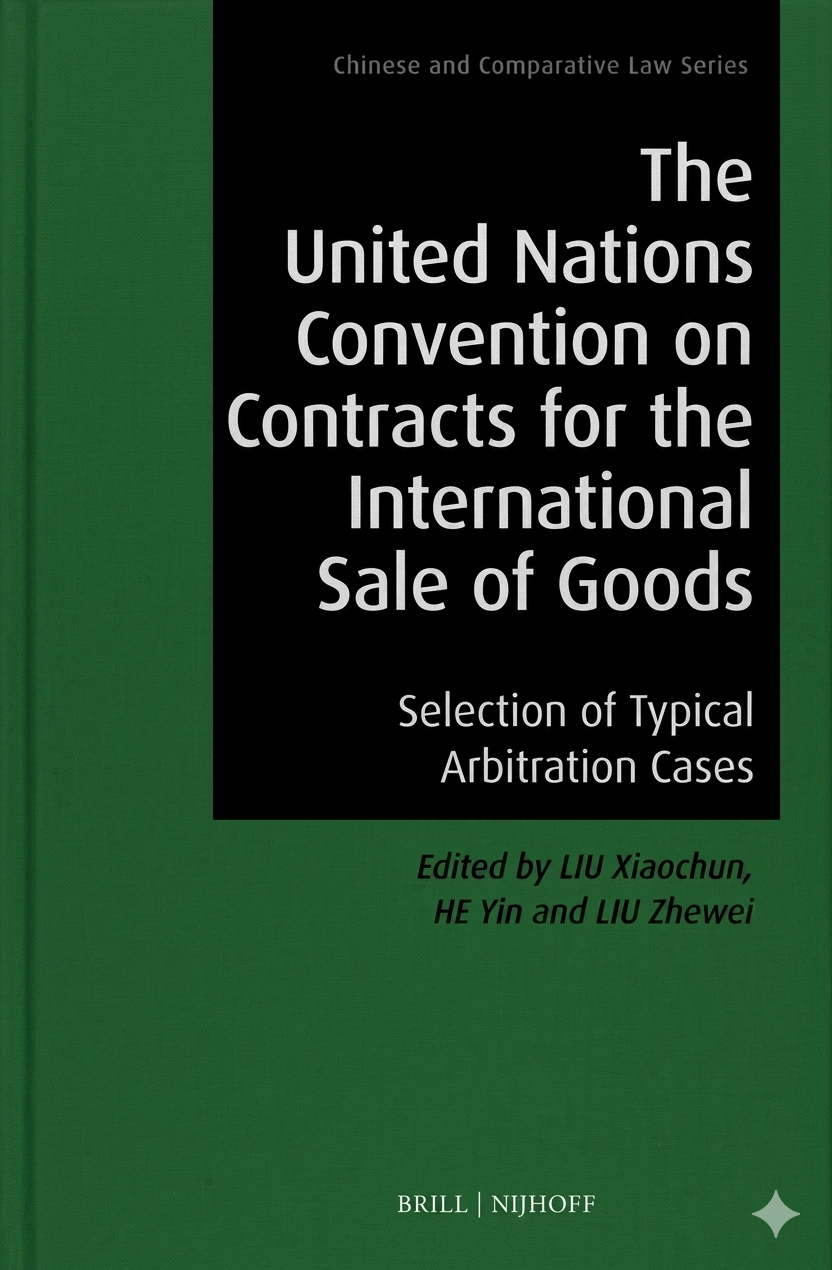
The United Nations Convention on Contracts for the International Sale of Goods: Selection of Typical Arbitration Cases
The United Nations Convention on Contracts for the International Sale of Goods: Selection of Typical Arbitration Cases
Quote response within 24h · Institutional invoicing available
Couldn't load pickup availability
Authors:
Edited by Xiaochun Liu, Yin He and Zhewei Liu
- ISBN: 9789004751705
- Published: March 2026
- Format: Hardback
- Language: English
- Publisher: Brill Nijhoff
This is a Print On Demand Title. The publisher will print a copy to fulfill your order. Books can take between 1 to 3 weeks.
Description:
The United Nations Convention on Contracts for the International Sale of Goods: Selection of Typical Arbitration Cases provides a practical and scholarly examination of the CISG through 25 representative arbitration cases handled by the Shenzhen Court of International Arbitration (SCIA). First approved in Vienna on April 11, 1980, the Convention established a modern, uniform and fair legal regime for international sale of goods contracts, helping reduce uncertainty and transaction costs in cross-border trade.
This volume offers readers a structured study of how the Convention is applied in real disputes, drawing on extensive arbitral experience accumulated since China acceded to the Convention in 1986. The English edition follows the successful Chinese-language version published in 2020 and forms Volume 15 in the Chinese and Comparative Law series published by Brill Nijhoff.
Key Features:
Analysis of 25 representative arbitration cases under the CISG. Practical treatment of major issues in international sale of goods disputes. Structured case presentation including facts, party statements, tribunal findings, awards and commentary. Published in English following a well-received Chinese edition. Part of the respected Chinese and Comparative Law series from Brill Nijhoff.
Coverage:
Application of the Convention, formation and validity of international sale contracts, obligations of buyers and sellers, actual performance and damages, declaration of contract avoidance, force majeure and change in circumstances, commodity inspection and claims, INCOTERMS, and payment in international trade.
About the Authors:
This volume is edited by Xiaochun Liu, Yin He and Zhewei Liu, bringing together selected arbitration cases and legal analysis for scholars, arbitrators, practitioners and professionals working in international trade law and dispute resolution.
Table of Contents:
Part 1: Application of the Convention; Part 2: Formation and Validity of Contracts; Part 3: Obligations of the Buyer; Part 4: Obligations of the Seller; Part 5: Actual Performance and Damages; Part 6: Declaration of Contract Avoidance; Part 7: Force Majeure and Change in Circumstances; Part 8: Commodity Inspections and Claims; Part 9: INCOTERMS; Part 10: Payment in International Trade; Appendix: full text of the CISG.
Why buy this book?
This book is an excellent resource for anyone working with international commercial transactions, arbitration or comparative sales law. Instead of remaining at a purely theoretical level, it shows how the CISG operates in real arbitral disputes across different jurisdictions, making it especially valuable for legal practitioners, academics and institutional libraries.
Keywords:
CISG, United Nations Convention on Contracts for the International Sale of Goods, international sale of goods, international trade law, arbitration cases, commercial arbitration, SCIA, cross-border contracts, buyer obligations, seller obligations, damages, force majeure, INCOTERMS, payment in international trade, Brill Nijhoff
Target Audience:
international trade lawyers, arbitration practitioners, law firms, academics, researchers, university libraries, commercial law specialists, comparative law scholars, postgraduate law students, institutions focused on international business law
Genre:
Law, International Trade Law, Arbitration, Commercial Law, Comparative Law, Legal Reference
Q&A
Does the price include shipping?
Yes — the price includes worldwide shipping. Card/PayPal accepted, simple secure checkout.
How is the CISG actually applied in real arbitration disputes?
This volume presents 25 representative arbitration cases handled by the Shenzhen Court of International Arbitration (SCIA), each analyzed with facts, party positions, tribunal findings, the award, and expert commentary — showing how CISG principles translate into arbitral outcomes across real commercial disputes.
What does Chinese arbitration practice reveal about the CISG that Western sources don't cover?
China acceded to the CISG in 1986 and has accumulated one of the largest bodies of CISG arbitration practice in the world. This volume draws on that experience through SCIA cases, revealing how Chinese tribunals interpret key CISG provisions on formation, obligations, damages, force majeure, and contract avoidance — offering a perspective genuinely different from European or American CISG commentary.
How does the CISG handle force majeure and change in circumstances?
Force majeure under CISG Article 79 is one of the most disputed provisions of the Convention. Part 7 examines how SCIA tribunals have applied Article 79 in representative cases, analyzing the threshold for excuse from liability and its interplay with party-drafted force majeure clauses.
What role do INCOTERMS play in CISG disputes?
INCOTERMS and the CISG interact constantly in international sale of goods disputes. Part 9 addresses INCOTERMS specifically through SCIA case analysis, covering delivery obligations, risk of loss, and payment obligations.
How do arbitrators determine damages under the CISG?
Damages under CISG Articles 74–77 follow a foreseeability-based framework. Part 5 examines actual performance and damages awards made by SCIA tribunals, showing how arbitrators quantify losses and apply the mitigation requirement.
Is it suitable for law libraries and institutional orders?
Yes, institutional invoicing is available and CLNZ Books ships to law libraries and universities worldwide.
Where can I buy The United Nations Convention on Contracts for the International Sale of Goods: Selection of Typical Arbitration Cases?
You can order this title directly from CLNZ Books at clnzbooks.com.
📘 Learn more about shipping, delivery times, and returns, see our FAQ here.